
Art Trends for Luxury Hospitality
The sophisticated traveler arriving at a luxury hotel in 2026 brings an accumulated visual understanding from having visited dozens of hotel properties across countries and continents. It’s likely they’ve developed an instinct for distinguishing genuine curatorial vision from decorative afterthought.
What we're observing across luxury hospitality in 2026 represents a fundamental recalibration. Properties are moving beyond art as purely aesthetic contributor toward collections that function as cultural propositions. This shift isn't cosmetic but instead reflects changing expectations about what luxury spaces should offer.
After developing art programs for numerous luxury residential and hospitality projects, we're identifying clear patterns in how the most discerning properties approach their collections. Here's what we see as defining the landscape.
Please note: Selected images are not projects where we have worked as the art consultants, but are luxury hotel art programs that we admire and wish to highlight.
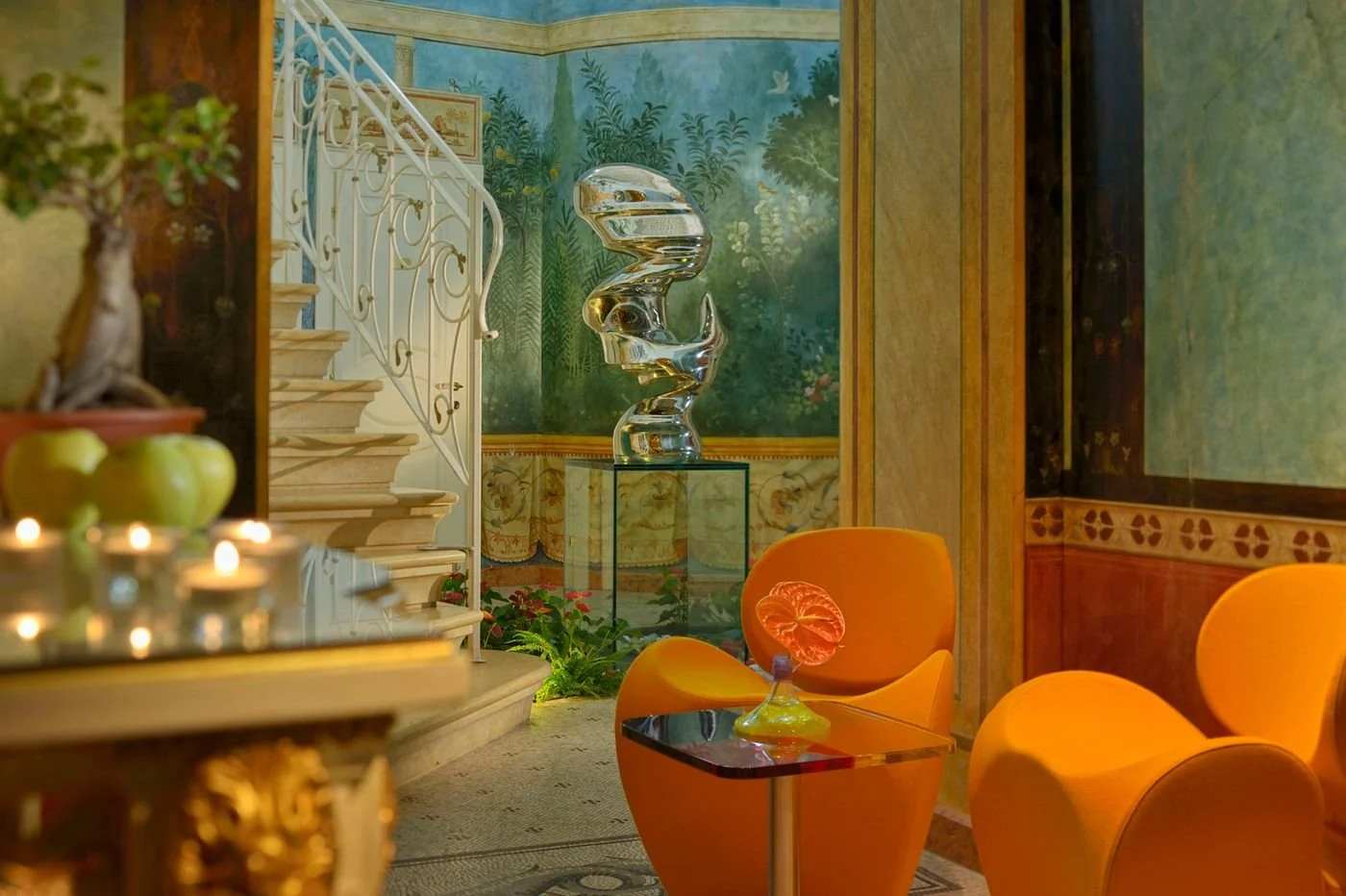
Byblos Art Hotel Villa Amistà
The Museum-Hotel Model Matures
Properties like The Dolder Grand in Zurich established early benchmarks—housing over 100 artworks including Salvador Dalí, Andy Warhol, Takashi Murakami, and Fernando Botero, with a 36-foot Warhol painting commanding the lobby. Yet 2026 has evolved beyond the "blue-chip collection as status symbol" model that characterized earlier approaches.
The Silo Hotel in Cape Town demonstrates this maturation. Located above the Zeitz Museum of Contemporary Art Africa, it transcends mere display to position itself within a larger cultural infrastructure. Guests aren't simply viewing contemporary African art, but they're engaging with one of the continent's most significant cultural institutions. The hotel functions as gateway to deeper understanding, not just a showcase of acquisition.
Similarly, The Fife Arms in Braemar, Scotland, owned by art dealers Iwan and Manuela Wirth, (of Hauser an Wirth) houses over 16,000 artworks and objects including pieces by Picasso and Lucian Freud. The remarkable aspect isn't volume or aggregate value but rather how the collection constructs narrative about the Scottish Highlands, integrating historical material with contemporary interventions in ways that feel organic rather than imposed.
What distinguishes these programs from their predecessors is intentionality. Earlier museum-hotel models often emphasized acquisition over integration, resulting in impressive but disconnected collections. Current approaches prioritize how art functions within the guest experience, not as separate attraction but as fundamental dimension of how the property communicates identity and values.
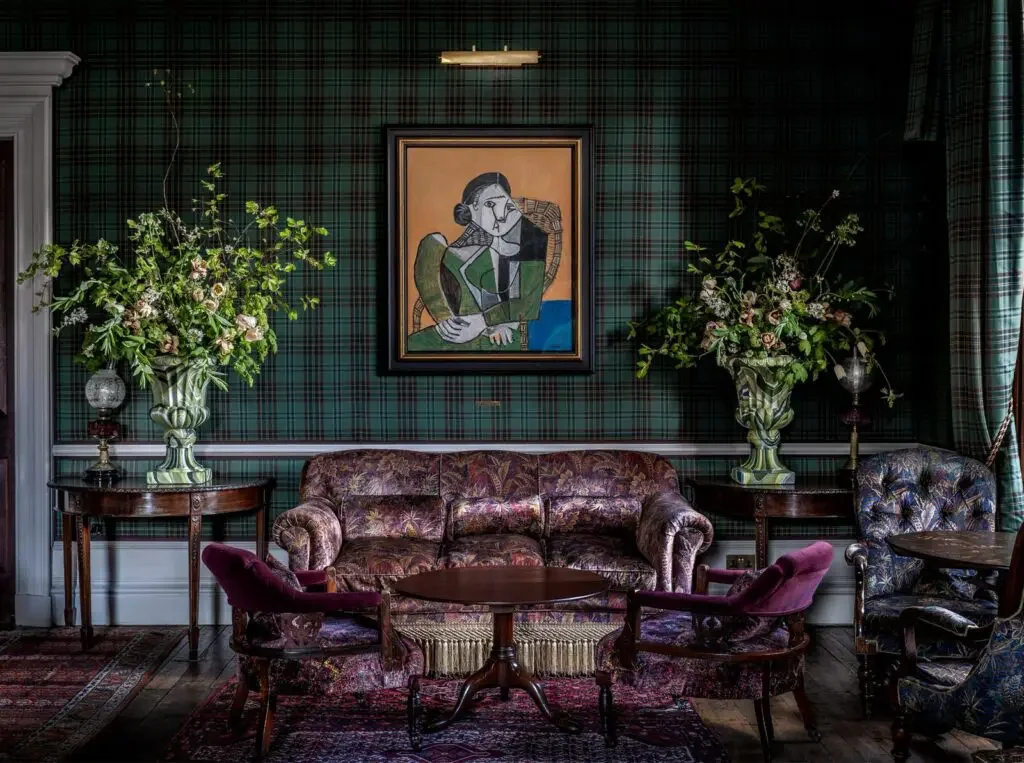
The Fife Arms in Braemar, Scotland
The Private Club Influence
The proliferation of exclusive members' clubs and even luxury co-working campuses has recalibrated expectations around art in luxury spaces. These environments understand that collections should foster belonging rather than simply project prestige.
Forward-thinking clubs curate rotating exhibitions, host artist talks, commission site-specific installations, and develop programming that treats art as living conversation rather than static display. Shoreditch Arts Club launched a dedicated curatorial service specifically to address the complexity of integrating art meaningfully into architectural spaces, recognizing that thoughtful curation requires specialized expertise distinct from interior design or brand management.
The most sophisticated hospitality properties in 2026 are adopting parallel approaches:
Artist residencies (Ace Hotel and Villa Lena for example) create opportunities for direct engagement between guests and working practitioners
Rotating exhibitions in public spaces establishing reasons for return beyond accommodation and service.
Cultural programming built around collections—talks, performances, workshops that activate the work
Emerging artist platforms positioning hotels as cultural anchors rather than passive collectors
This represents a philosophical shift. Where properties once competed on acquisition budgets and artist recognition, they're now competing on depth of cultural engagement and capacity to facilitate meaningful exchange. The metric isn't collection value but rather guest participation in ongoing cultural discourse.
La Colombe d'Or in Saint-Paul-de-Vence, France, has operated within this paradigm for decades. The historic hotel wasn't merely frequented by artists like Matisse and Picasso—they were integrated into the social fabric, leaving work in exchange for hospitality. The collection, including an Alexander Calder mobile, emerged organically from genuine relationships rather than acquisition strategy. That spirit of artistic community, not collection building, is what 2026's properties are working to recapture.
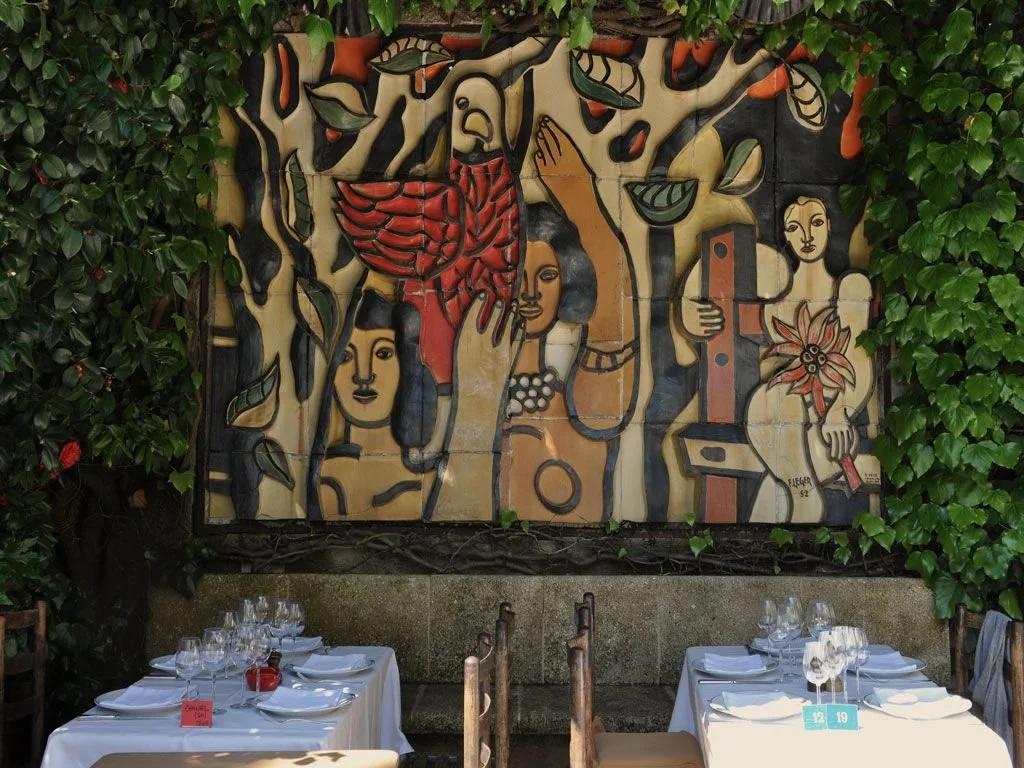
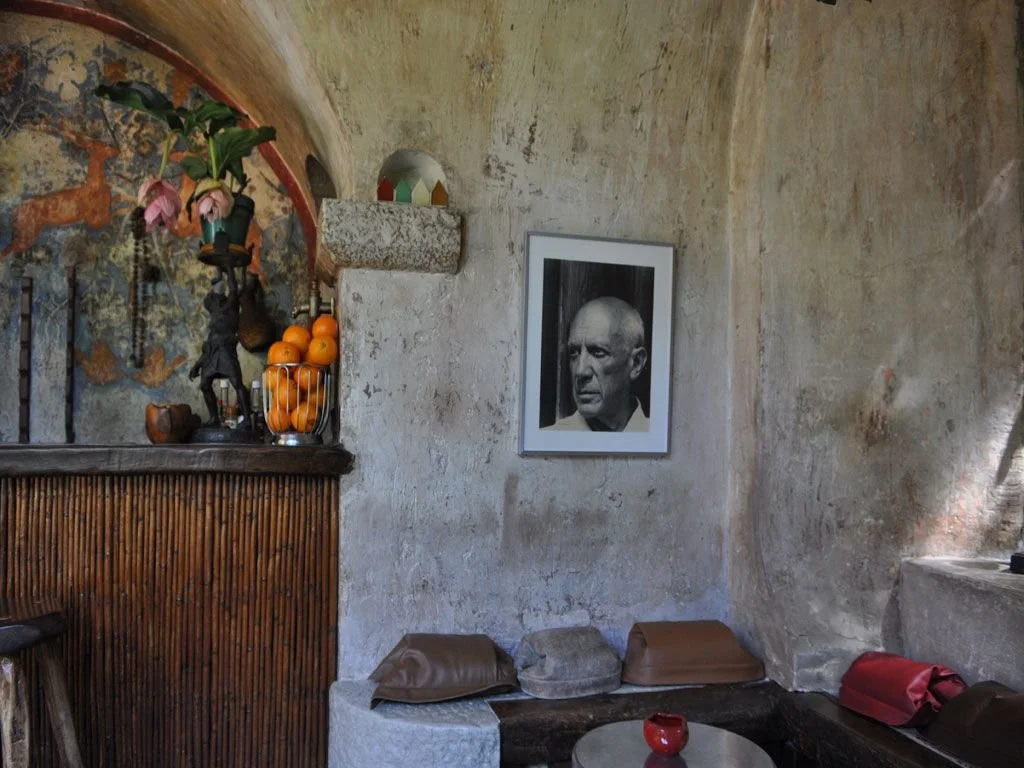
La Colombe d'Or in Saint-Paul-de-Vence
Regionality Without Reductionism
"Local art" in hospitality has historically defaulted to visual shorthand and these gestures toward place satisfy superficial requirements for regional reference but rarely engage seriously with contemporary artistic production in their locations..
2026's approach to regional art demonstrates increased sophistication. Leading properties are moving beyond tourist-board aesthetics to showcase work that reflects actual cultural discourse, the debates, contradictions, and creative tensions that define places beyond their marketable imagery.
The Silo Hotel's integration with Zeitz MOCAA exemplifies this evolution. Rather than filling walls with "African art" selected to confirm international guests' preconceptions, it engages rigorously with contemporary African artistic discourse. Guests encounter artists addressing colonialism, identity, urbanization, and globalization through distinctly African perspectives, the result is a grouping of work that's regionally rooted but globally conversant, refusing simplification or exoticization.
The distinction is crucial: authentic regional engagement doesn't mean rejecting connection to place, but rather engaging with place as it actually exists - complex, evolving, contested - rather than as it's marketed to visitors seeking easily digestible authenticity.
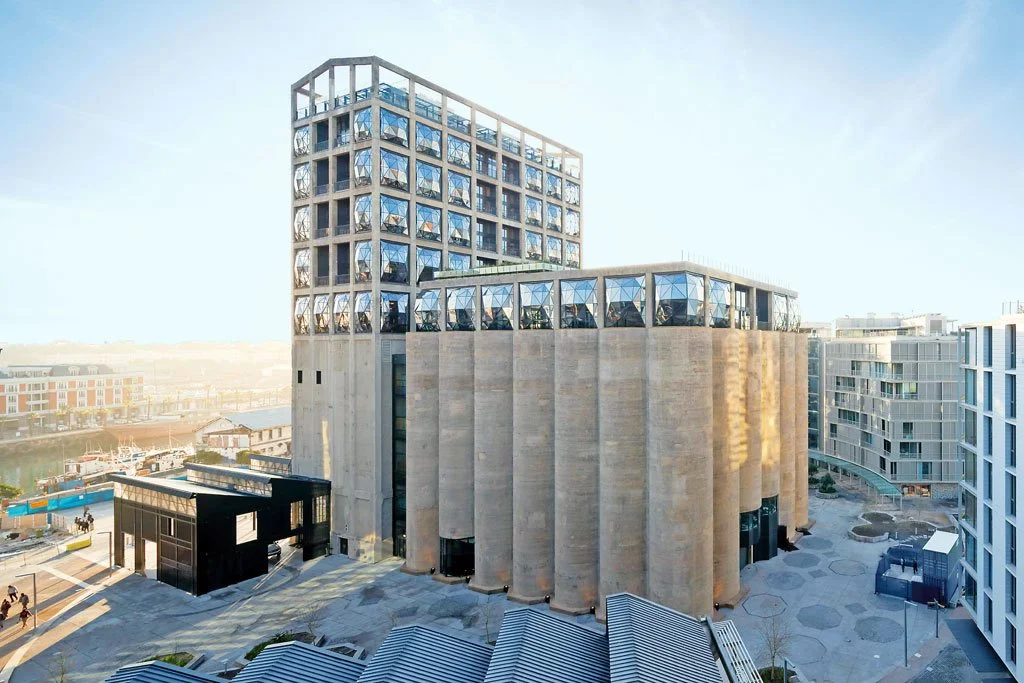
Exterior view of the Zeitz Museum (MOCAA), Cape Town, South Africa, designed by Thomas Heatherwick
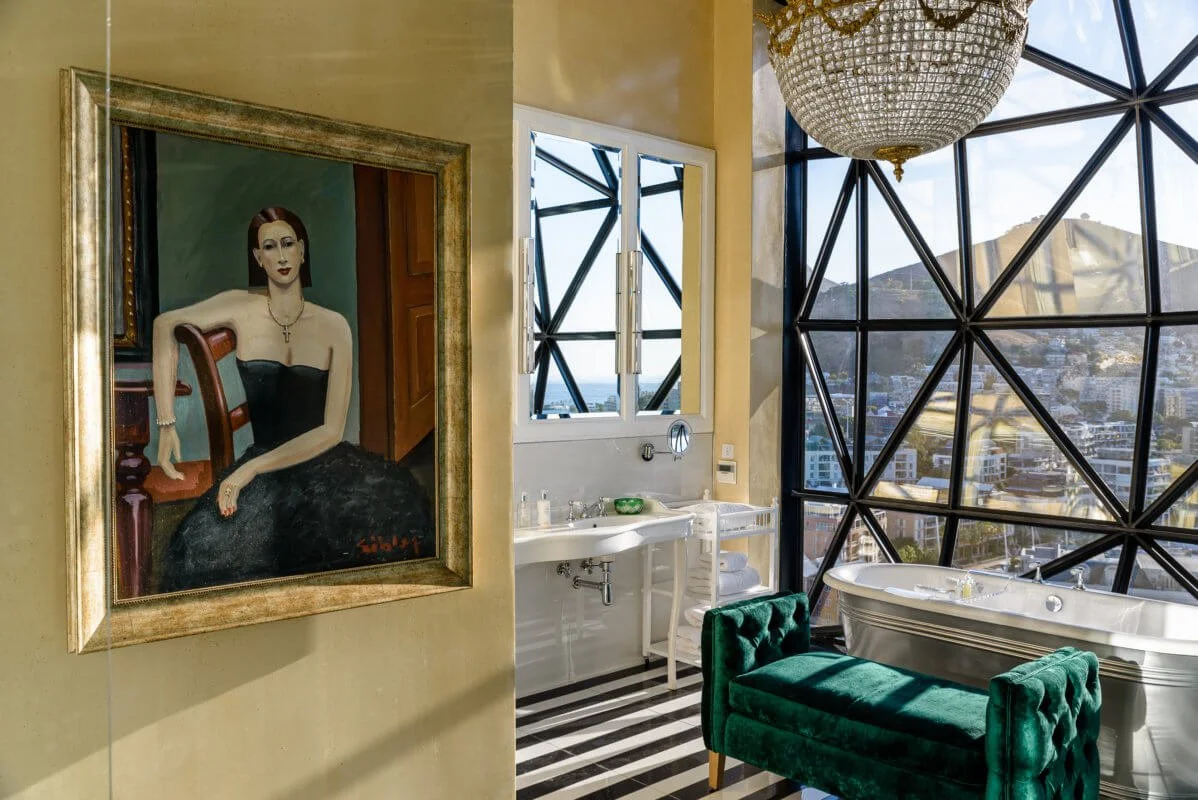
The Silo Hotel, Cape Town
Art as Environmental Intervention
The museum-hotel concept has evolved considerably from its initial iterations. Properties like 21c Museum Hotels pioneered the model, but 2026 interpretations extend beyond art-as-object toward art-as-environment.
Byblos Art Hotel Villa Amistà in Verona demonstrates this expanded conception. The 17th-century villa filled with contemporary work from Damien Hirst, Anish Kapoor, and Marina Abramović creates deliberate tensions between historical architecture and provocative contemporary practice. Guests don't simply admire discrete objects, they navigate dialogues between past and present, ornate and minimal, sacred and profane. The entire property functions as site for these juxtapositions rather than neutral container for individual works.
Leading properties are commissioning or acquiring:
Immersive installations where guests physically enter the artwork rather than viewing from distance
Kinetic sculptures responding to movement, light, or environmental conditions
Sound art and acoustic installations transforming spatial perception and temporal experience
Light works by artists like James Turrell (featured at Fontainebleau Miami Beach) that affect consciousness and perception
Multi-sensory experiences where scent, texture, temperature, and even air pressure become artistic media.
Afterglow by JPA Design, featured at London Design Festival, integrated circadian lighting and sensory balance into built environment. The space itself became therapeutic through design, with lighting quality and color temperature affecting guests' physiological states. Hotels are recognizing art can serve similar functions—not merely decorating but actively shaping how guests experience spatial and temporal dimensions of their stay.
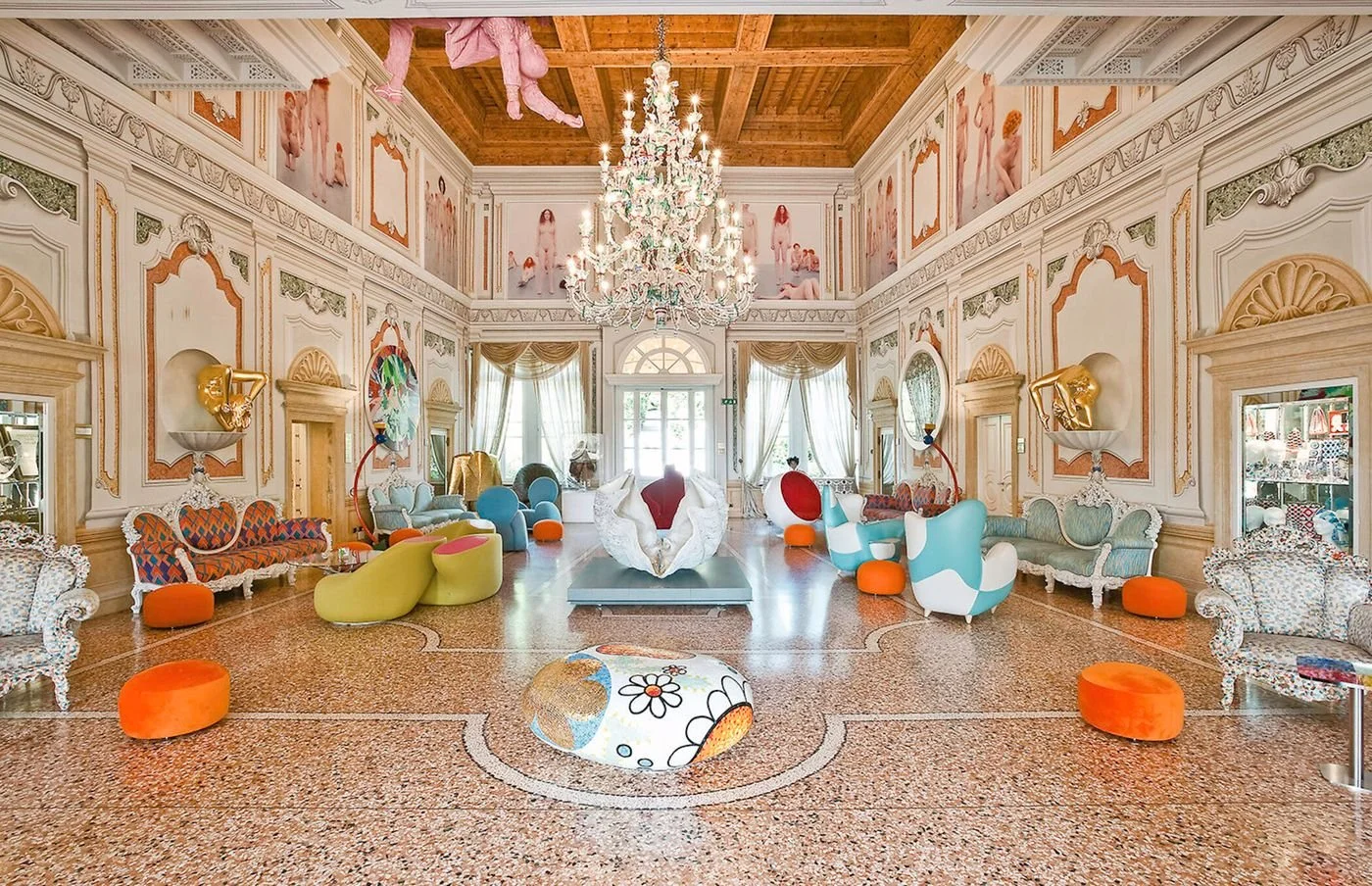
Byblos Art Hotel Villa Amistà in Verona
Expertise as Competitive Advantage
What distinguishes properties like The Dolder Grand or La Colombe d'Or from hotels with expensive but ineffective collections? Not budget—numerous properties invest substantially in art that fails to create meaningful impact. The differentiator is curatorial expertise: the specialized knowledge required to construct coherent, compelling collections that function as more than accumulated objects.
The Fife Arms benefits from ownership by art dealers Iwan and Manuela Wirth, who bring decades of experience building museum-quality collections, understanding artist markets and trajectories, and creating visual narratives that reward sustained attention. Most hospitality developers and operators lack this specialized background, and that expertise gap is increasingly apparent in comparative outcomes.
The most sophisticated properties in 2026 are addressing this systematically, engaging professional art consultants early in design processes—not as afterthought or finishing touch but as strategic partners informing spatial planning, lighting design, and architectural detailing.
The expertise an art consultant can bring to these unique properties includes
Market knowledge identifying artists before widespread recognition and price escalation
Curatorial vision constructing coherent narratives across multiple works and media
Technical understanding of conservation requirements, lighting design, installation methodology, and long-term maintenance
Cultural sensitivity enabling authentic engagement with regional contexts without appropriation or reductionism
Relationship infrastructure providing access to galleries, artists, studios, and emerging practices
Byblos Art Hotel Villa Amistà succeeds because someone possessed the curatorial intelligence to juxtapose Marina Abramović's confrontational performance art with ornate 17th-century Venetian architecture, recognizing how the tension between contexts would animate both. That level of sophistication—knowing not just what to acquire but how works interact with each other, with architecture, with historical context—is what transforms collections from inventory to integrated experience.
We see these foundational shifts as leading to art programs that transcend decorative arrangement. They create reasons for visitors to return independent of accommodation quality, generate authentic word-of-mouth among culturally engaged guests, and position properties as cultural anchors within their communities. They become places that contribute to rather than merely extract value from local cultural ecosystems.
The sophisticated traveler who's encountered hundreds of properties globally remains attentive to art programs demonstrating genuine curatorial vision and substantive cultural engagement. That combination remains sufficiently rare to constitute meaningful competitive advantage.
Developing an art program that functions as cultural influence rather than decorative solution? We work with luxury hospitality properties to create collections that meet the expectations of genuinely discerning guests while contributing meaningfully to regional cultural infrastructure.
To learn more about partnering on luxury hotel projects:
Email our Director, Liz Corkery. liz@jointheprintclub.com
The Print Club Journal
Never miss a story from the studio
Printshop tours, artist interviews and guidance for building your collection — delivered to your inbox. Join our mailing list for new Journal articles and the occasional note from the studio.
Join our mailing list