
How to Budget for Art in High-End Residential and Hospitality Projects
Art is best budgeted as a defined allowance set early in design development (commonly a low single-digit percentage of the overall fit-out) rather than a figure improvised at the end from whatever remains. The right number depends less on the scale of the project than on the role you want art to play in it. Is it decoration hung in the gaps? Or is it being foregrounded as a focus on the space?
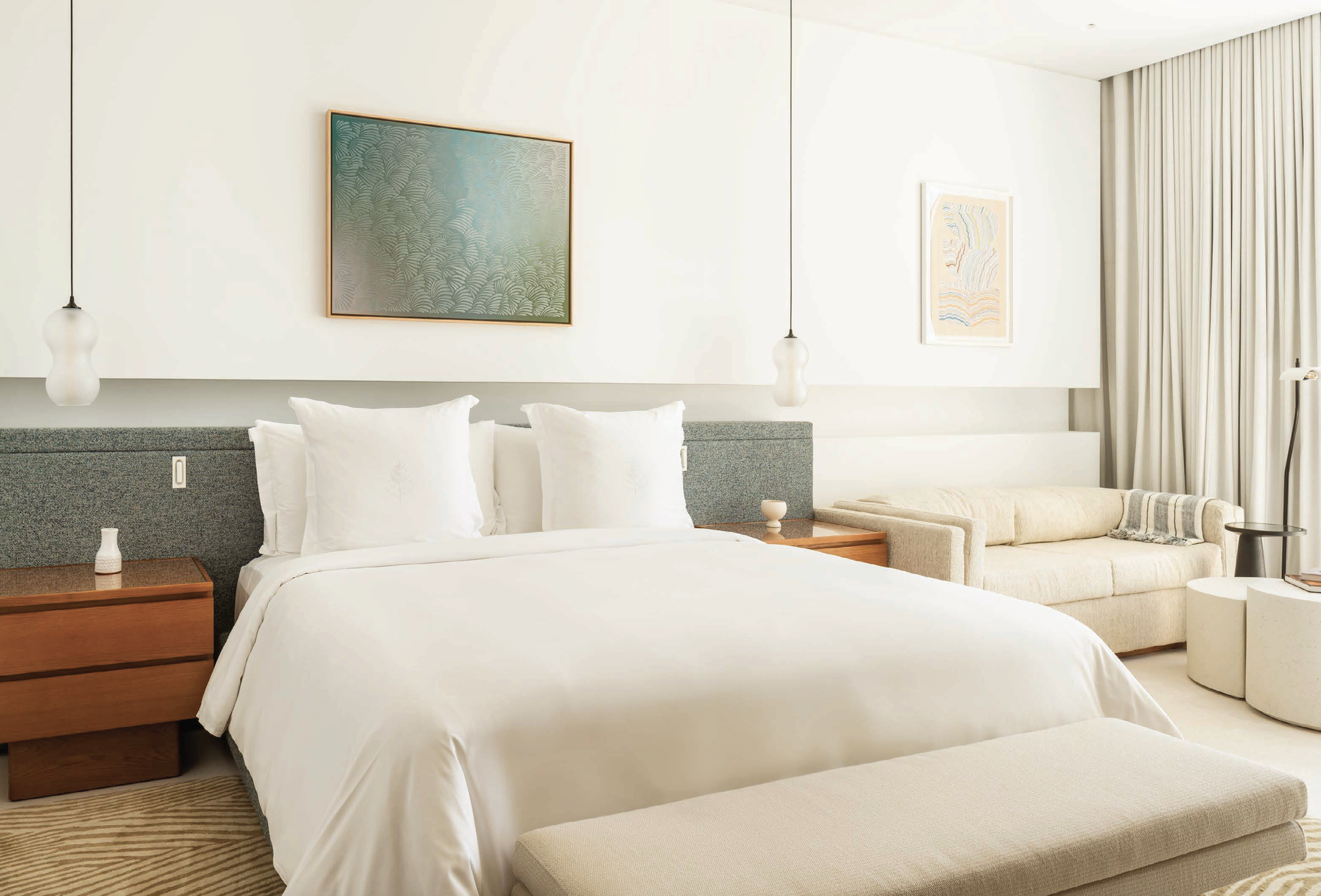
Peninsula Residences at Costa Palmas. We were provided with a fixed percentage of the FF&E budget and developed a series of art packages for the 36-key condominium development. Our packages included pieces designed and fabricated in-house, invited artist editions and new commissioned work from artisans.
Why there's no single number
The honest answer to "what should I budget for art" is that it varies more than almost any other line in the schedule. A sofa has a knowable range; a bathroom has a knowable range. Art spans from a considered edition on a bedroom wall to a commissioned centrepiece that anchors a lobby, and those two things are not the same purchase in kind, or in cost. A budget that treats them as interchangeable will either limit an ambitious project or over-capitalize on a modest one.
So the useful first question isn't "how much," it should be "what is the art here for?" Some answers to that question could be; we want to indicate to our hotel guests that we’re invested in being cultural patrons, or the art really needs to carry the storytelling we’ve established through our branding. For residential spaces it could be to provide an compelling visual focus in a living space or provide warmth within private spaces. The number that follows these answers arrives with far less guesswork.
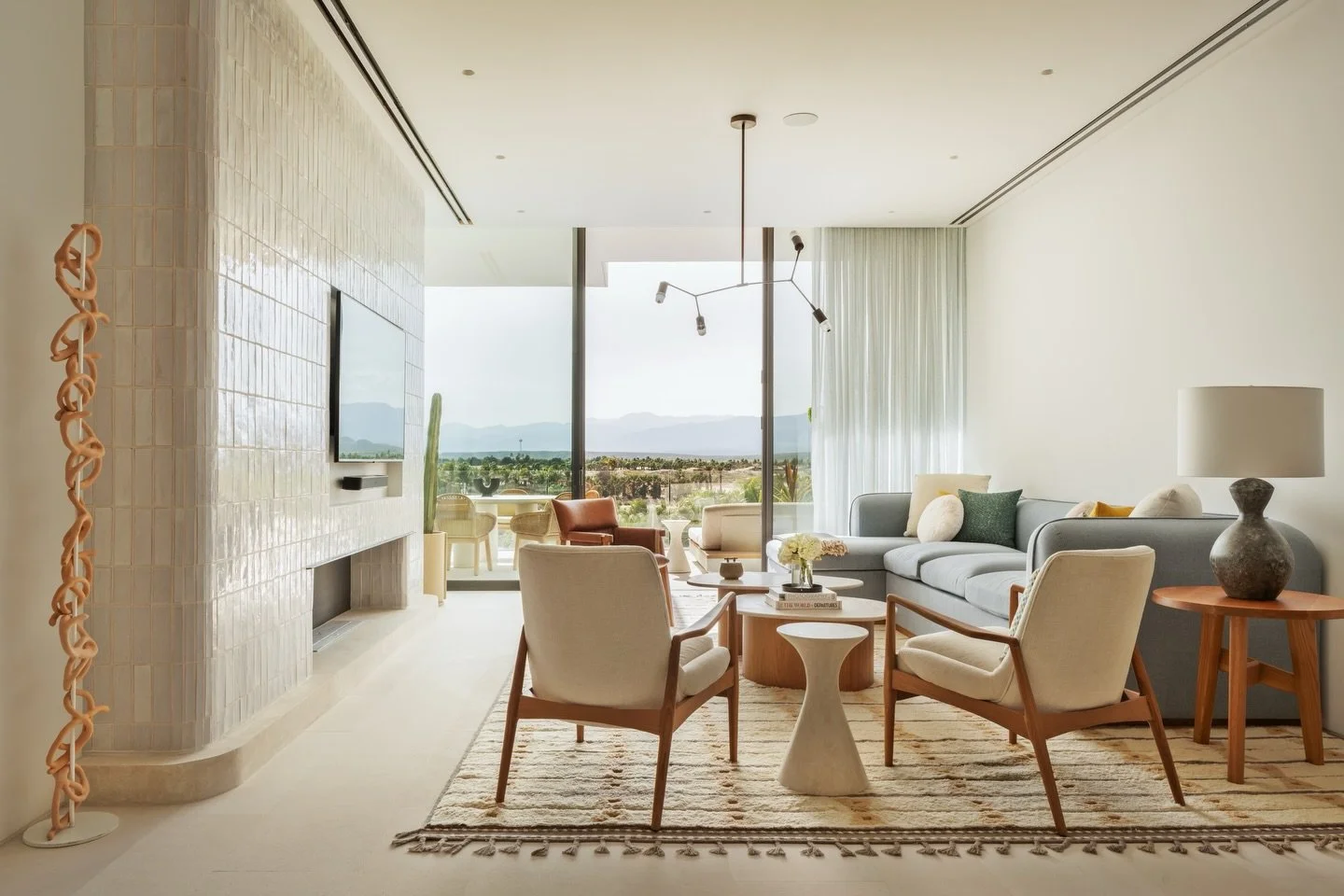
Peninsula Residences at Costa Palmas. We were provided with a fixed percentage of the FF&E budget and developed a series of art packages for the 36-key condominium development.
How art budgets are actually structured
In practice, we see art budgeted three ways, sometimes in combination:
Percentage of the fit-out or FF&E budget - This is most common in hospitality and is often a low single-digit percentage (typically anywhere from 2-7%), on the higher end of those percentages for properties where art is central to the guest experience.
Per-room or per-key allowance - This is useful when the art programme is more defined, and keeps a large property coherent without pricing each space from scratch.
A discrete collection budget - this is typical in high-end residential and is a set against the client's ambitions for the home rather than tied mechanically to the build cost.
None of these is more correct than the others. What matters is that the method is chosen deliberately at the outset, so the figure is defensible to the client and stable through the project rather than a moving target renegotiated every time another trade runs over.
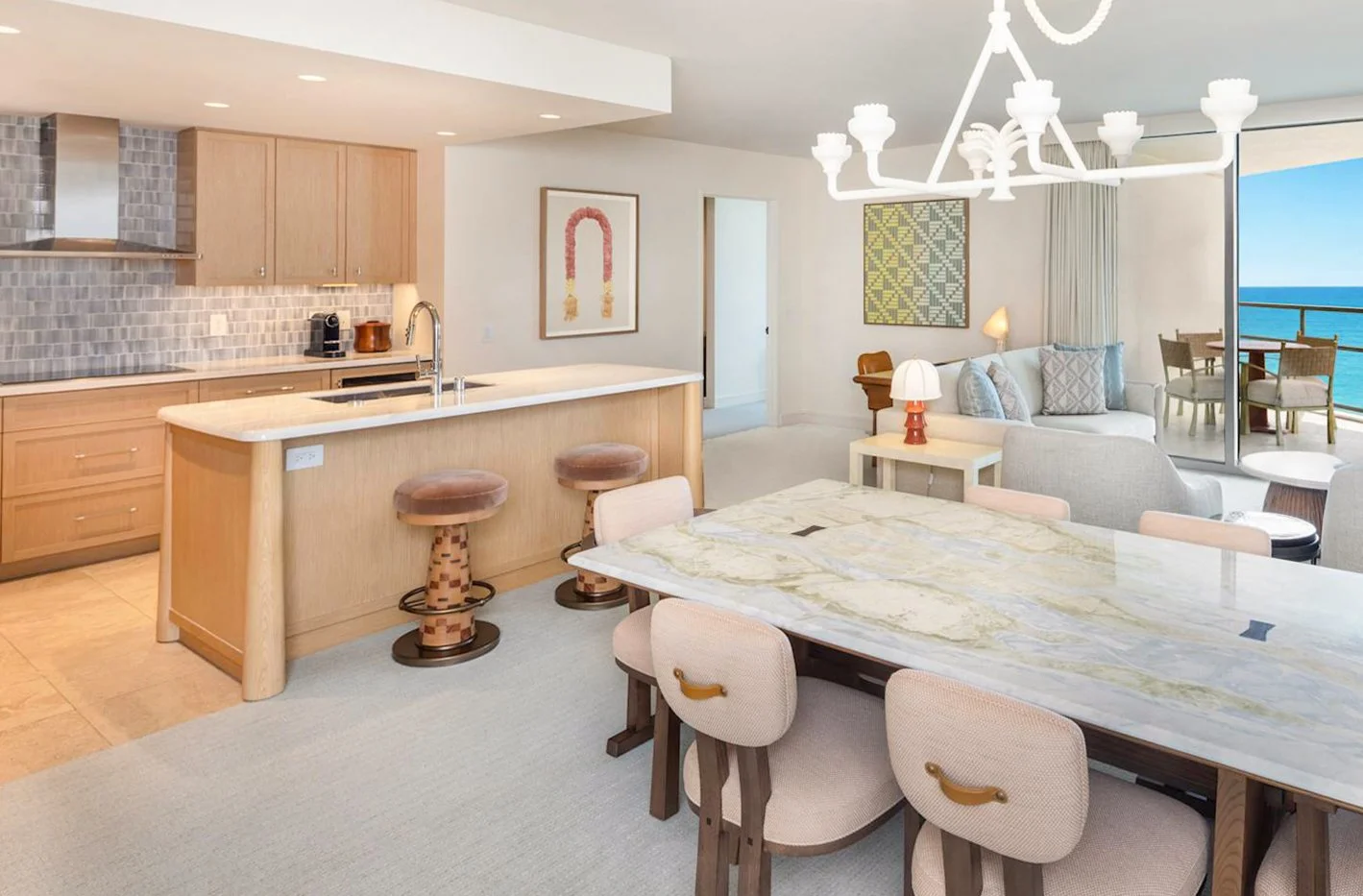
A guest room at the newly renovated Ka La’i, Waikiki. This project had a per-key budget established for each tier of guest room based on size and number of works required.
What moves the cost
Within any of those structures, a handful of factors do most of the work in determining where a project lands:
Original works versus editions – Limited-edition works on paper make collectible art accessible at a fraction of the cost of unique pieces, which is why editions do so much of the heavy lifting in a well-planned multi-unit art programme.
Commission complexity – A commissioned work sized and made for a specific space costs more than an existing piece (typically +20% more than an existing work from the same artist), and is often worth it for something bespoke. The brief, the artist, and the production method can all move the figure.
Scale and volume – A single large statement work and a coherent multi-piece programme across sixty rooms are different budgeting problems, and conflating them is a common source of overrun.
Framing, glazing and materials – In public and hospitality environments especially, these items can approach 40-50% of the art budget. Durability, conservation-grade materials and security hardware are all part of the real cost.
Delivery and installation – For work at scale, logistics and professional installation are a line worth naming early rather than absorbing late. Smaller pieces can sometimes be handled by the FF&E install team but larger or more elaborate installs require specialist art installers who have a higher day rate.

A private residence in Woodside where a total, discrete budget was assigned for the full “collection” of works to be acquired. Larger pieces were selected for public spaces while smaller, editioned prints and works on paper were featured in private spaces like bedrooms.
The case for setting the budget early
The single most valuable thing a designer can do with an art budget is fix it early during design development. When art is treated as a line settled at the end, it becomes decoration in the gaps and constrained by walls already built, lighting already positioned, and whatever budget survived the other trades.
Set the allowance early and the opposite happens. A dining room that commits in schematic design to a commissioned work for its main wall is built to hold it; the millwork accommodates it, the lighting is specced to it, the furniture placement is in harmony. The same work chosen three weeks before opening, however good, sits on the wall rather than in the room.
Communicating the number to your client
A defensible budget is only half the task; the other half is the conversation with the client, and this is where many otherwise excellent projects lose the art. Clients rarely arrive with a considered view of what art should cost, so the number can land as a shock if it appears without context. The designers who protect their art programmes are the ones who introduce the allowance early, frame it against the role art will play, and connect it to the client's own taste before a figure is ever discussed.
Translating a client's aesthetic preferences into a clear brief and an agreed number is a skill in itself, and it's the one we often help designers with. We've built a Guide for Style Discovery and Budget Communication with clients for exactly this process; it's one of the resources we share with the designers we partner with.
At Print Club, we set this foundation at the start of every project we take on. Budgets that are agreed on early and tied to intent, are what lets the art be as considered as the architecture. If you're shaping a residential or hospitality project and want to get the number right before it constrains you, get in touch.
Liz Corkery, Director
liz@jointheprintclub.com
The Print Club Journal
Never miss a story from the studio
Printshop tours, artist interviews and guidance for building your collection — delivered to your inbox. Join our mailing list for new Journal articles and the occasional note from the studio.
Join our mailing list