There are some printshops you carry around on a kind of wishlist for years and Artist Proof Studio in Johannesburg has been one of ours. We first came to know it through Graham's years teaching at the School of the Museum of Fine Arts in Boston (now SMFA at Tufts) where APS co-founder Kim Berman had herself studied, and where she forged a lasting connection with the printmaking department. Over the decades that followed, students and faculty travelled between the two cities more than once, and the studio's name kept surfacing in the work and the stories that came back. Graham never had the chance to visit while he was teaching. It remained a place we always meant to see and this year we finally did!
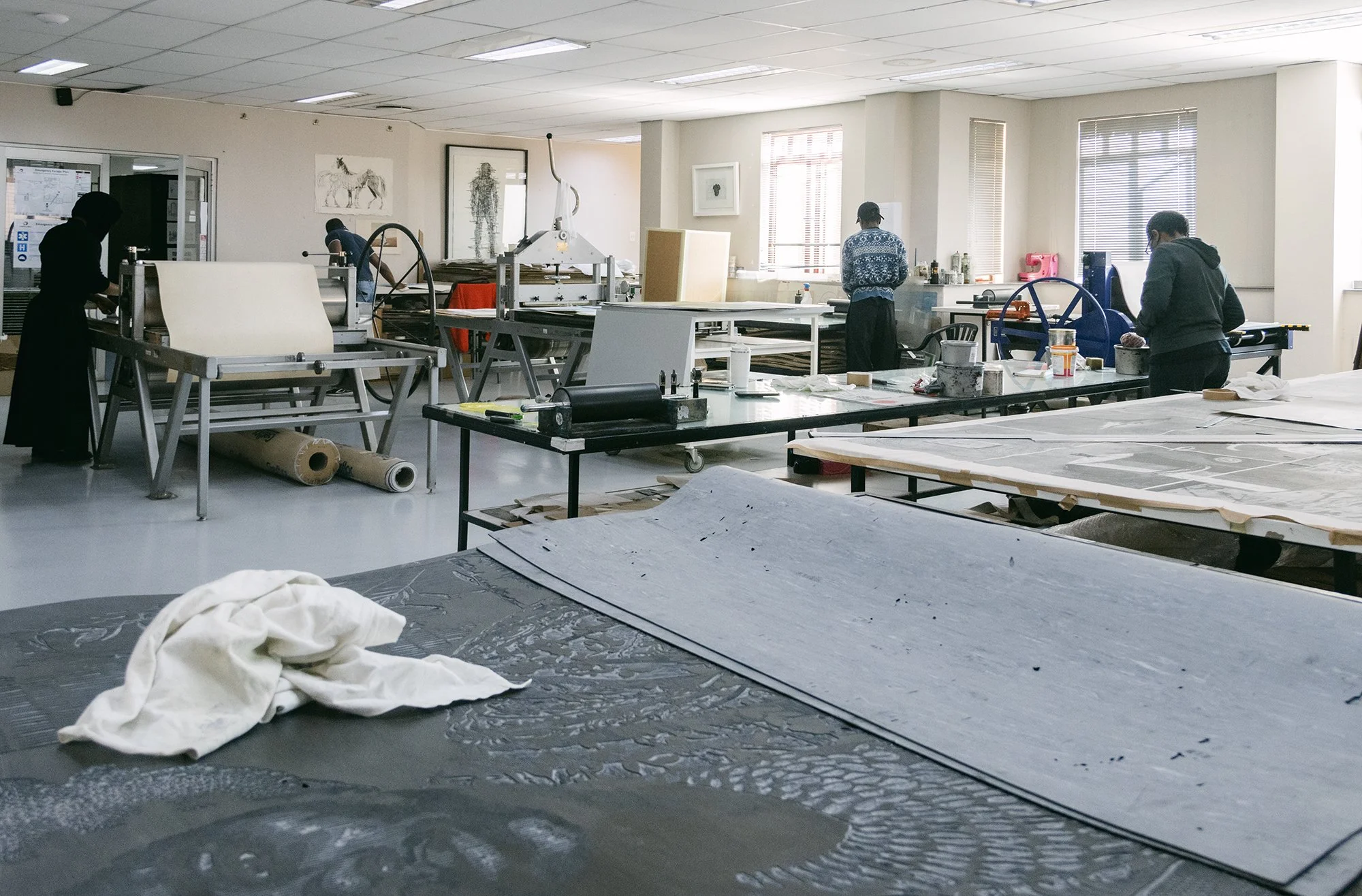
Artist Proof Studio [APS] was founded in 1991 by Kim Berman and the late Nhlanhla Xaba, in the last years of apartheid, on an idea that now reads as almost impossibly hopeful: that a print studio could model the democracy the country was still fighting for. Printmaking certainly suited the ambition; it is collaborative by nature, technically demanding, and ultimately generous — an edition, by definition, is made to be shared. Around that medium the founders built something closer to an institution than a workshop. They created a training program open to artists who had been shut out of formal art education by economics or history, grounded in the ethic of Ubuntu — an ancient philosophy from Southern Africa that translates to "humanity towards others" or often summarized as "I am because we are".
The studio's history has not been without its struggles. In 2003 a fire tore through the original premises, killing Xaba and destroying the archive and equipment. That APS rebuilt at all is remarkable and this year they celebrated thirty-five years of operation with more than five hundred artists trained.
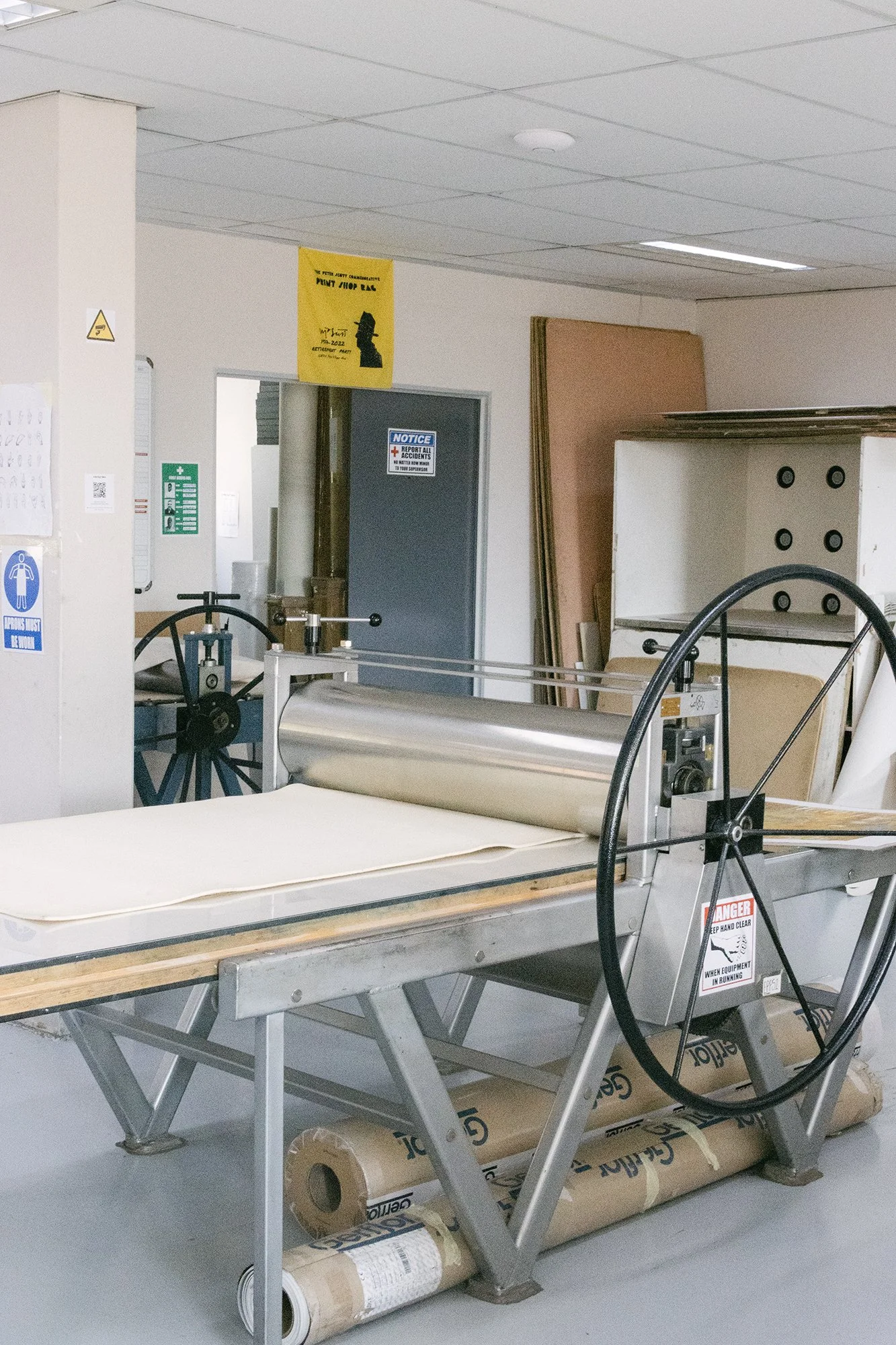
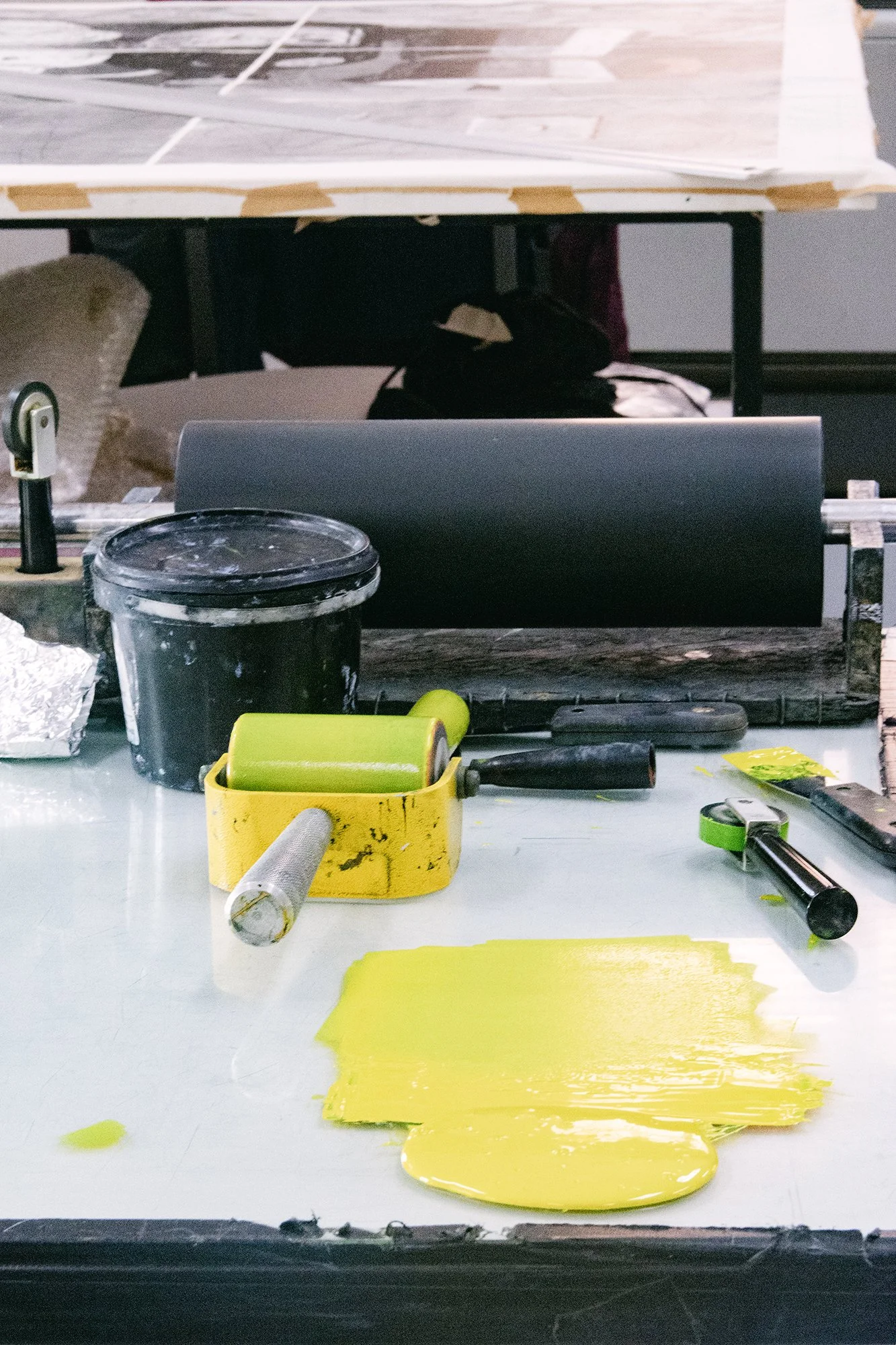
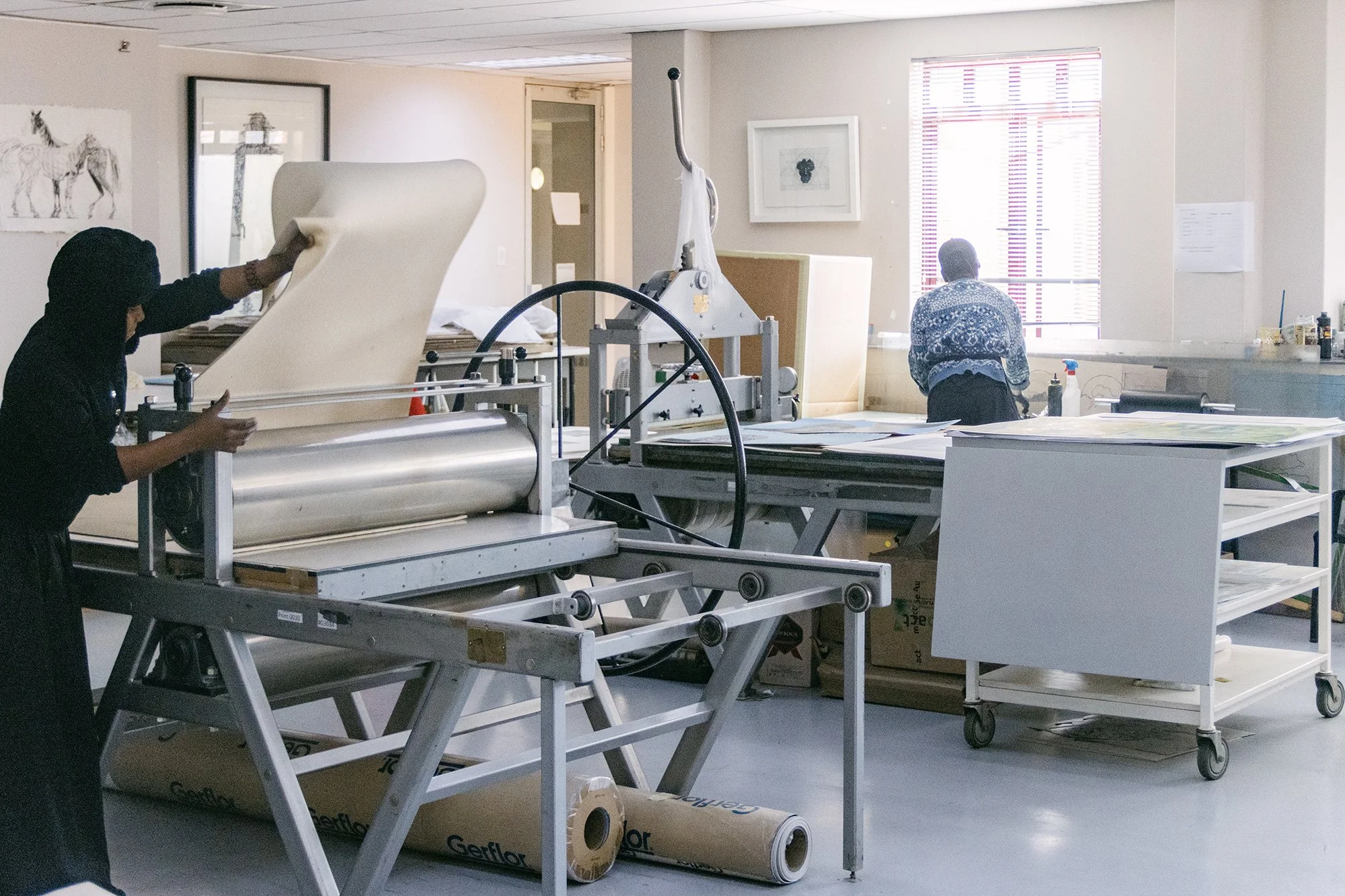
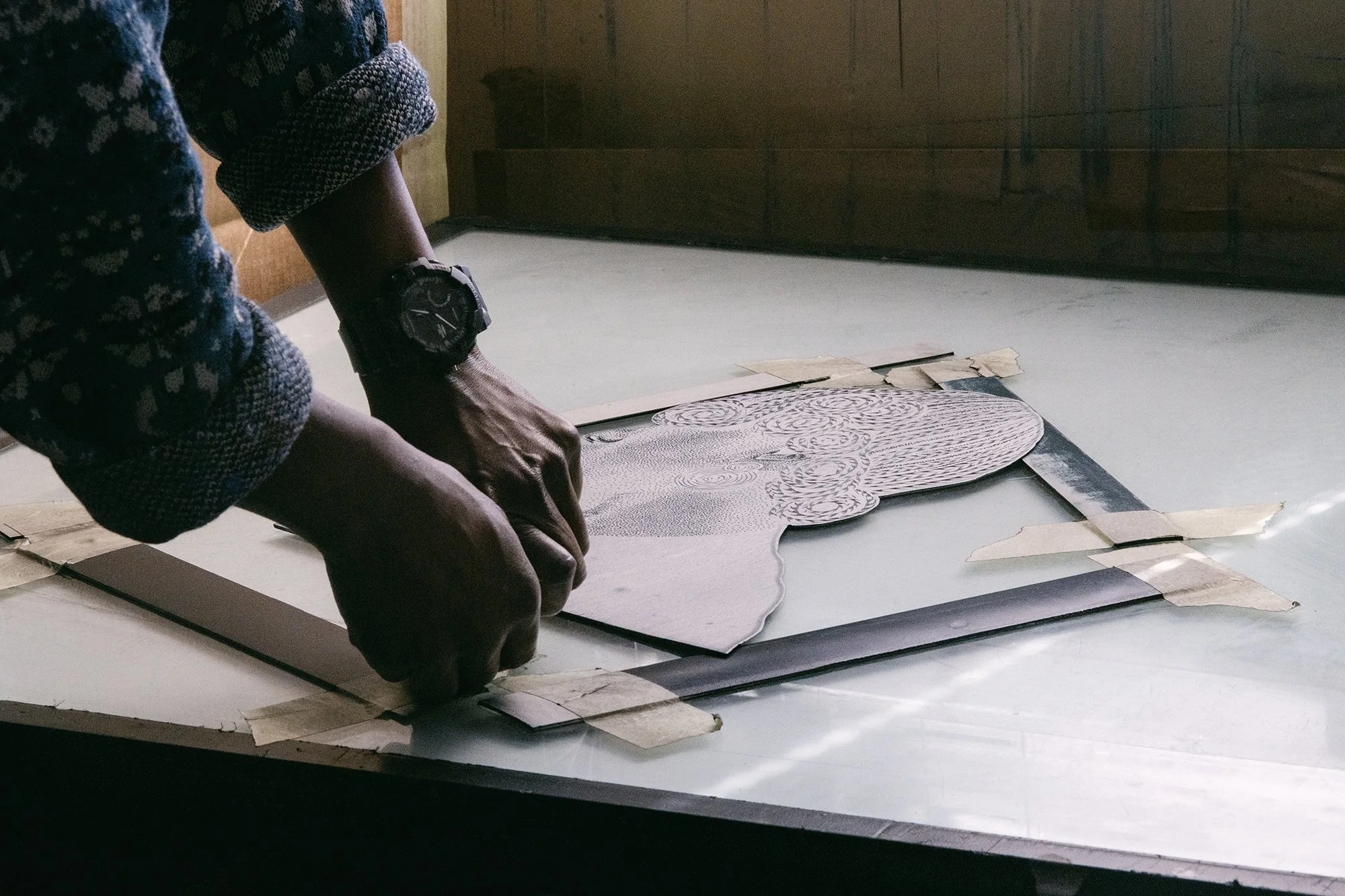
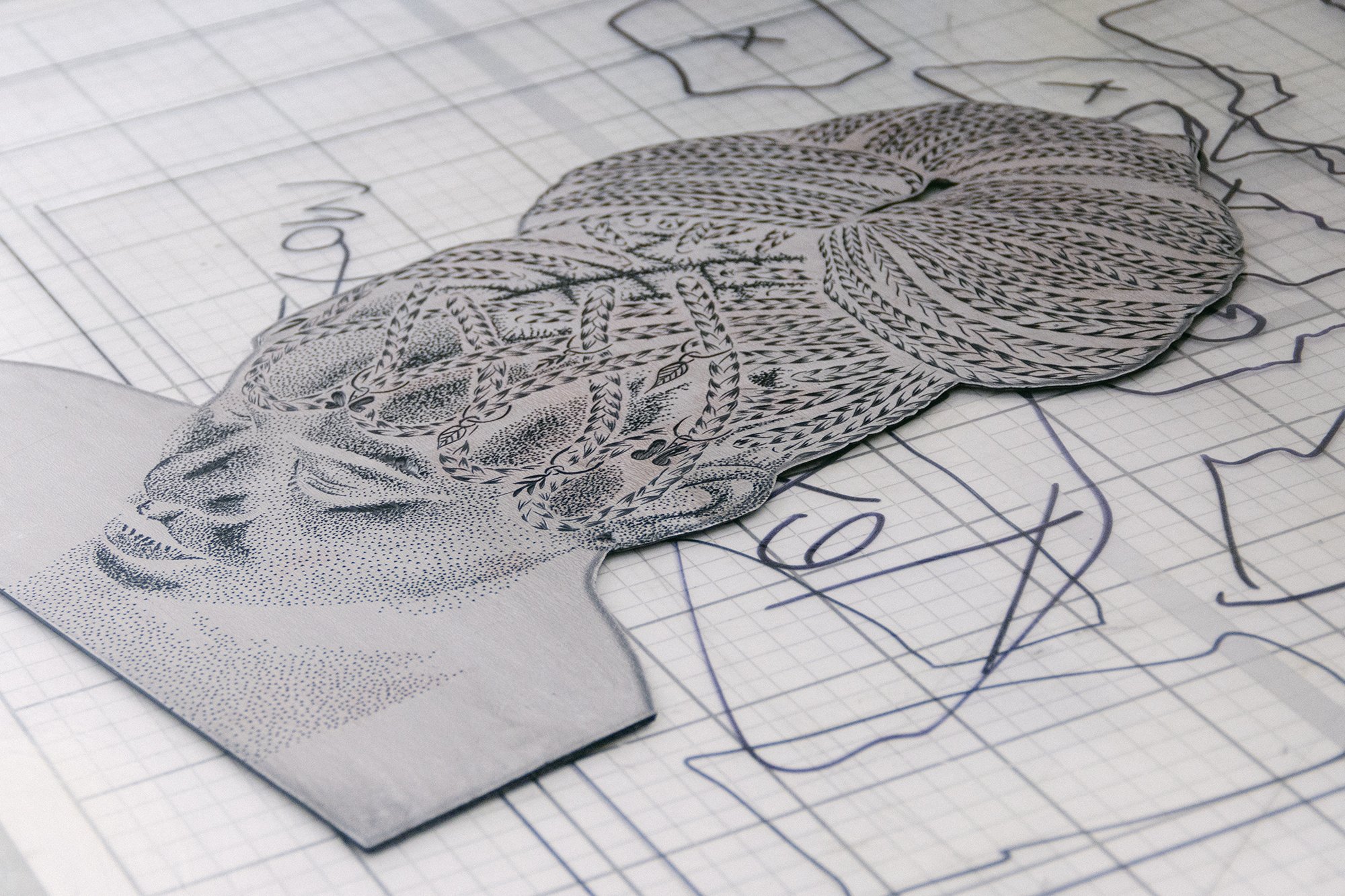
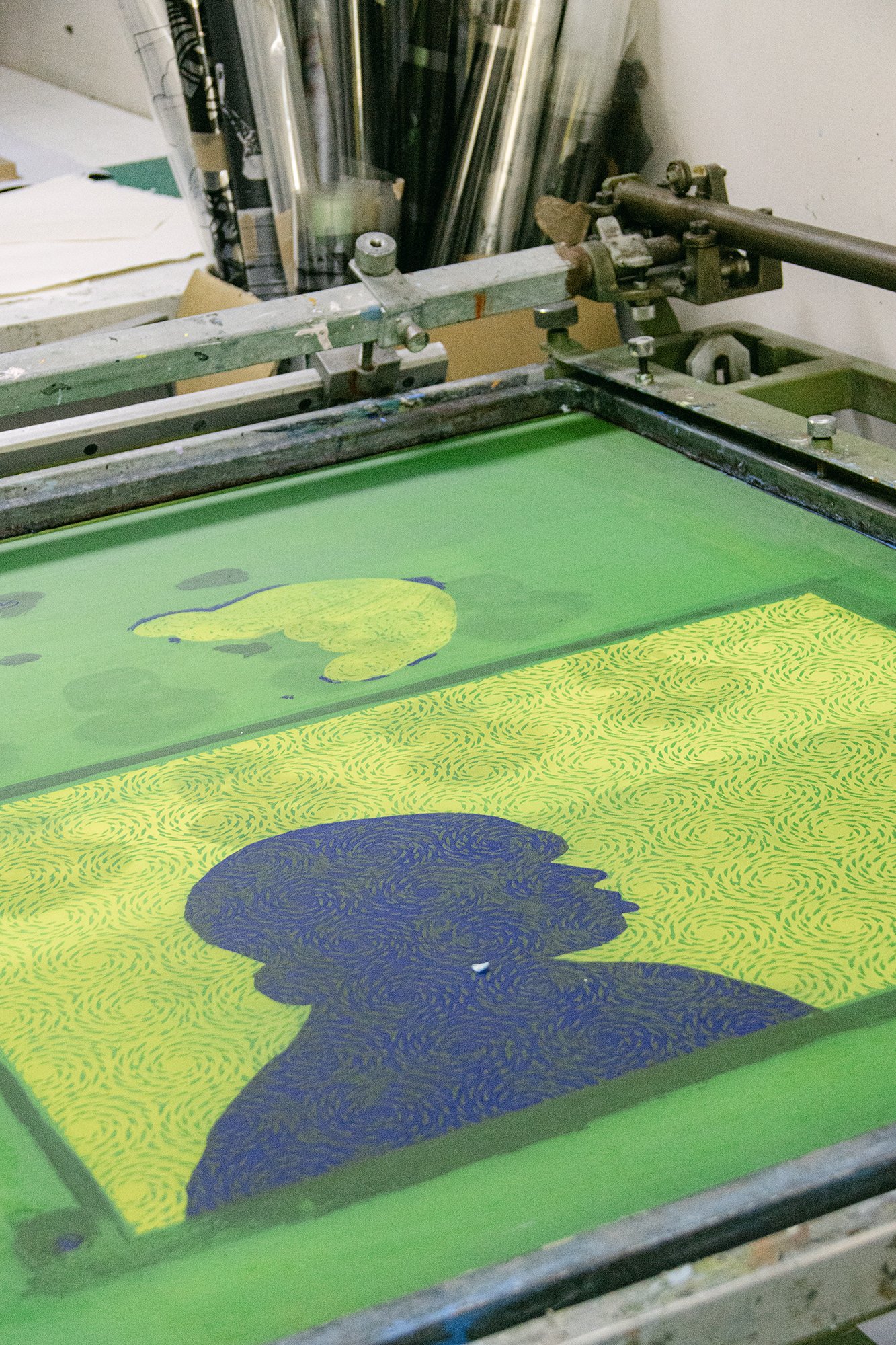
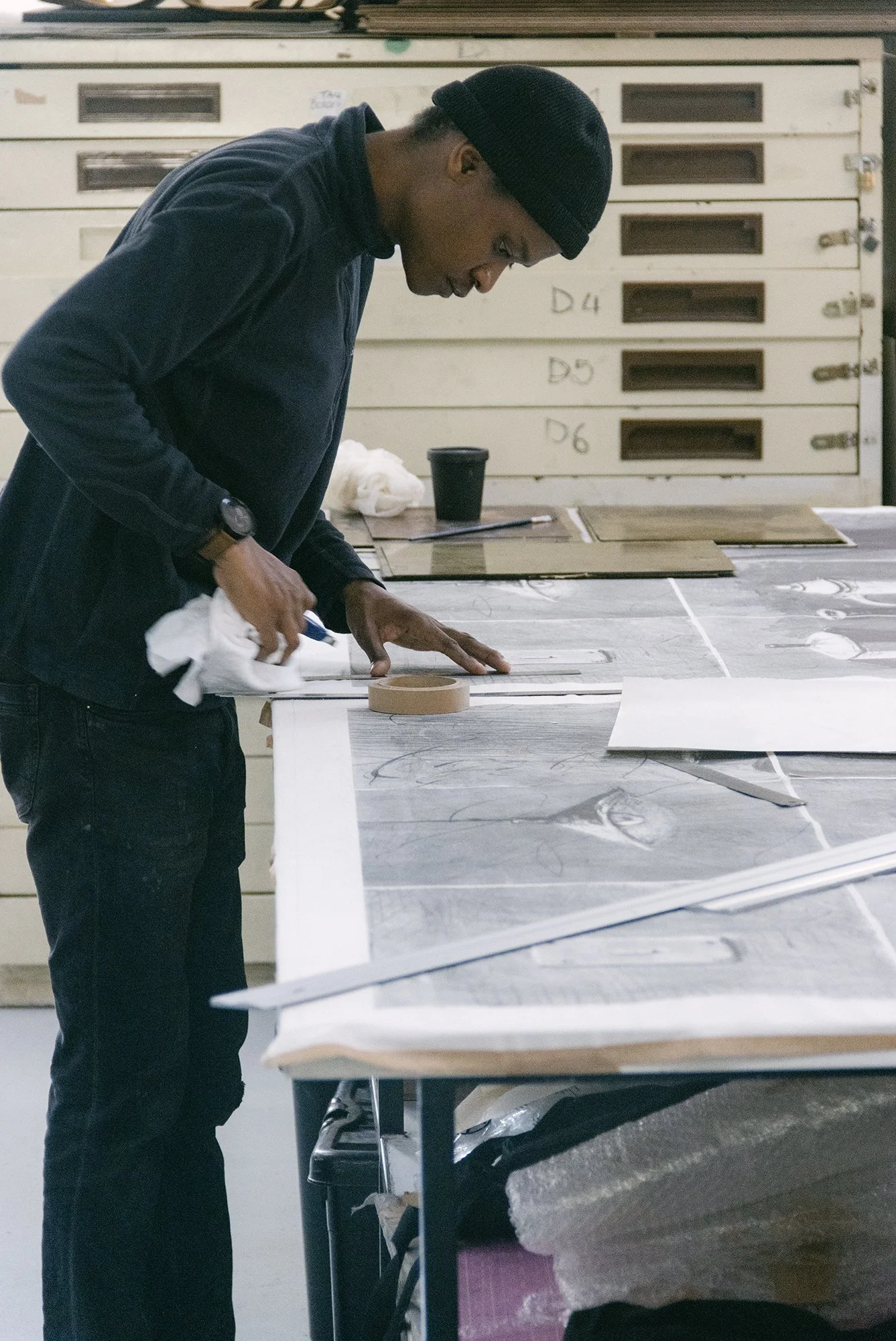
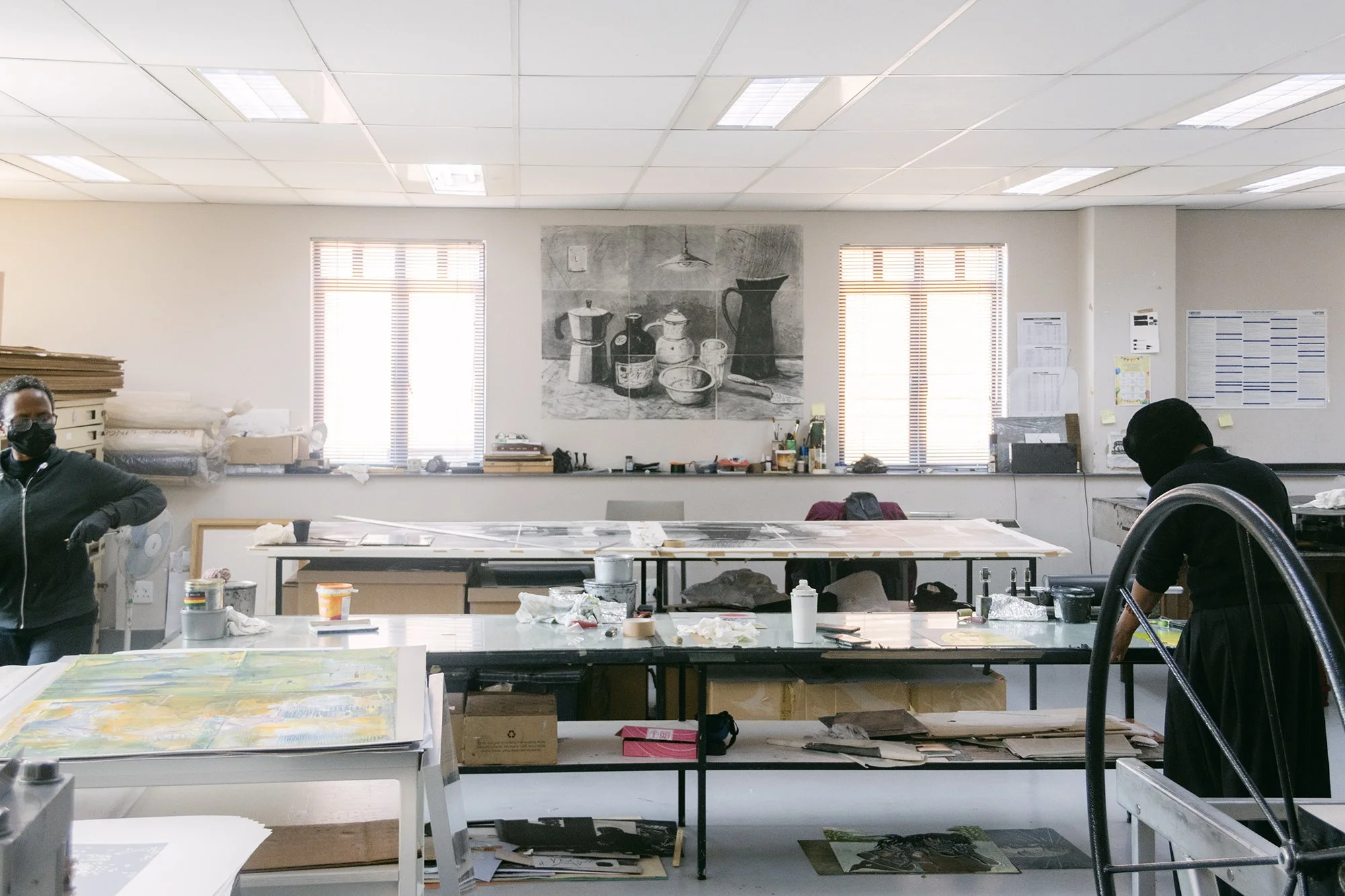
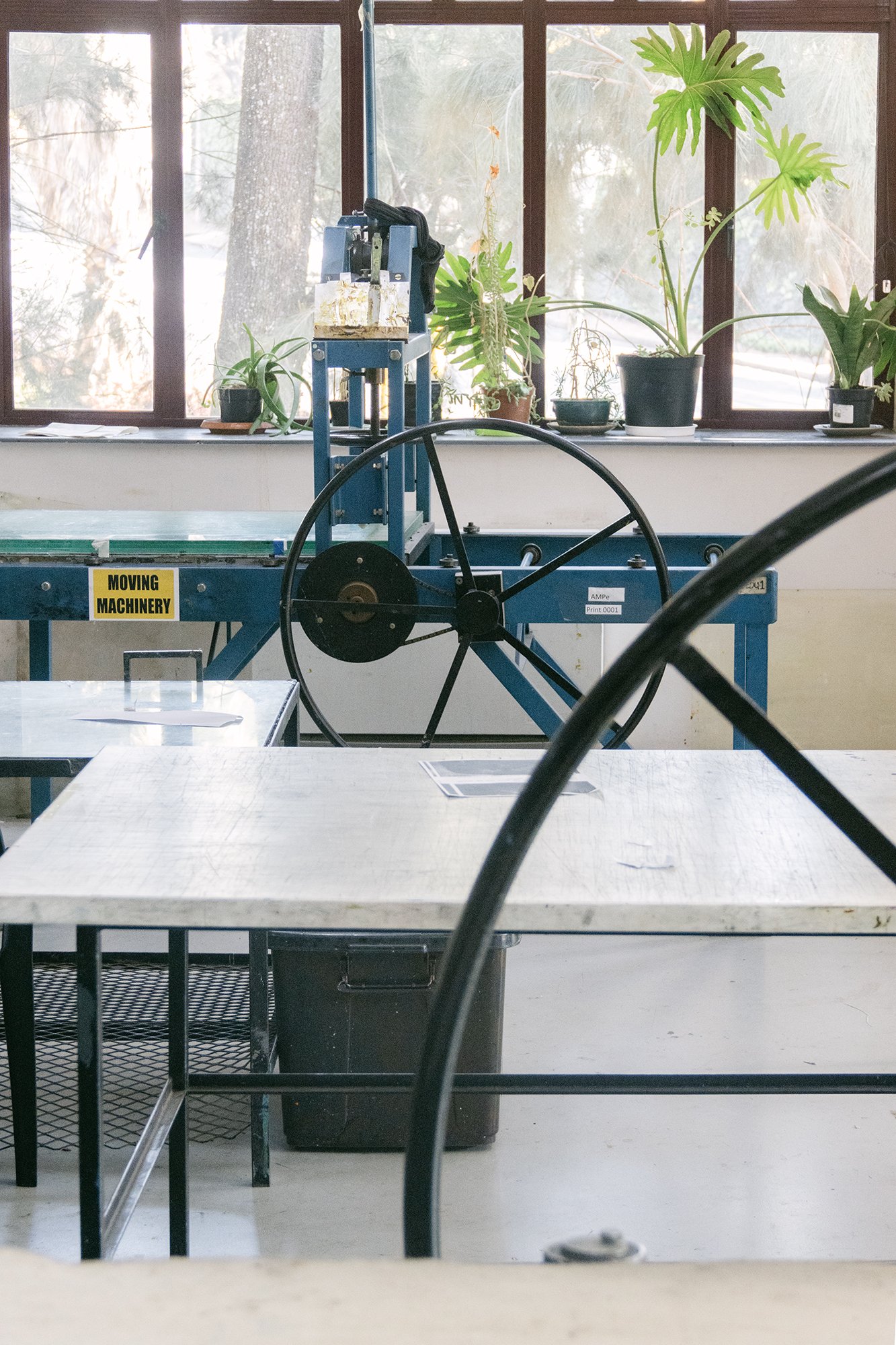
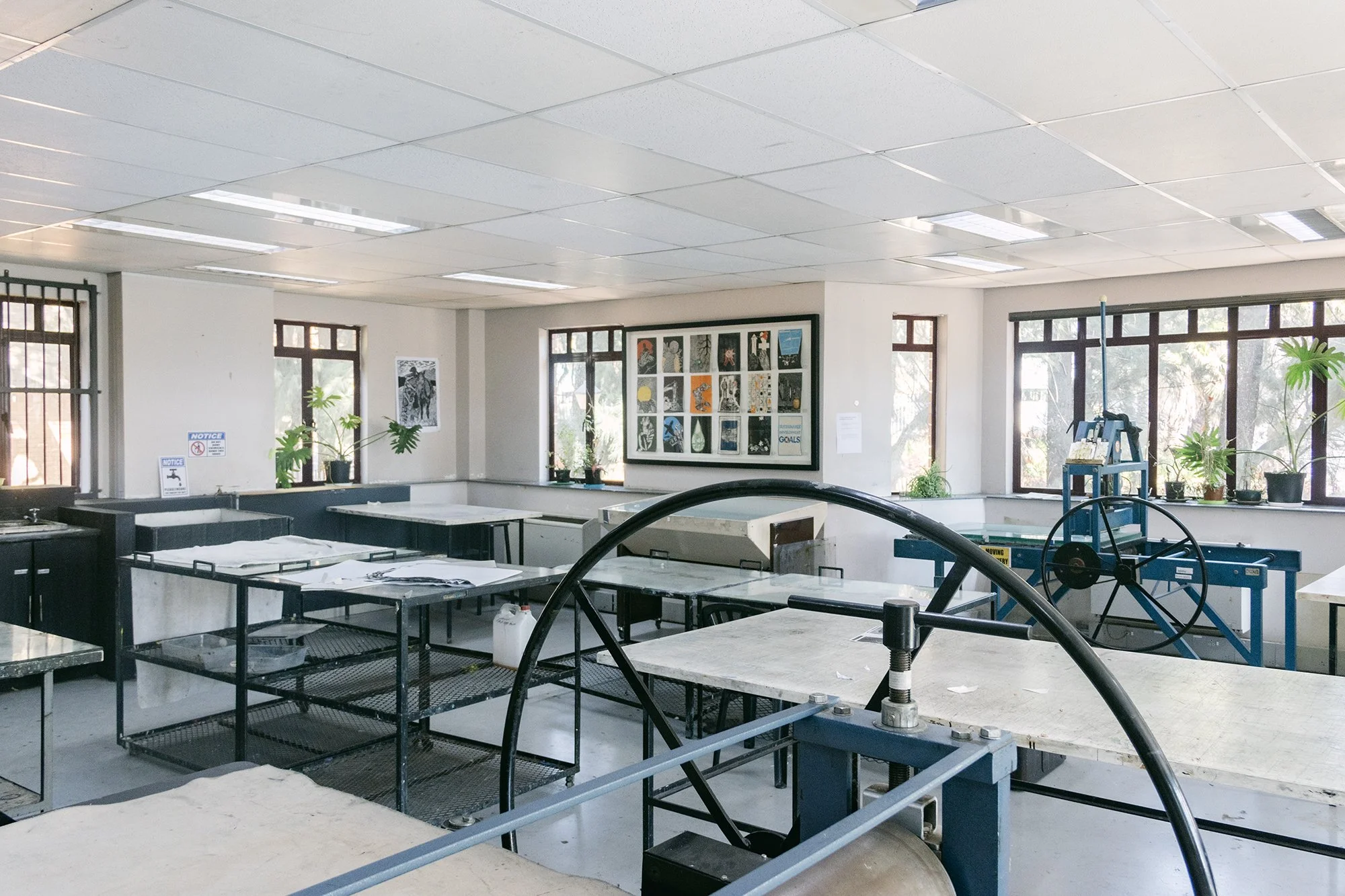
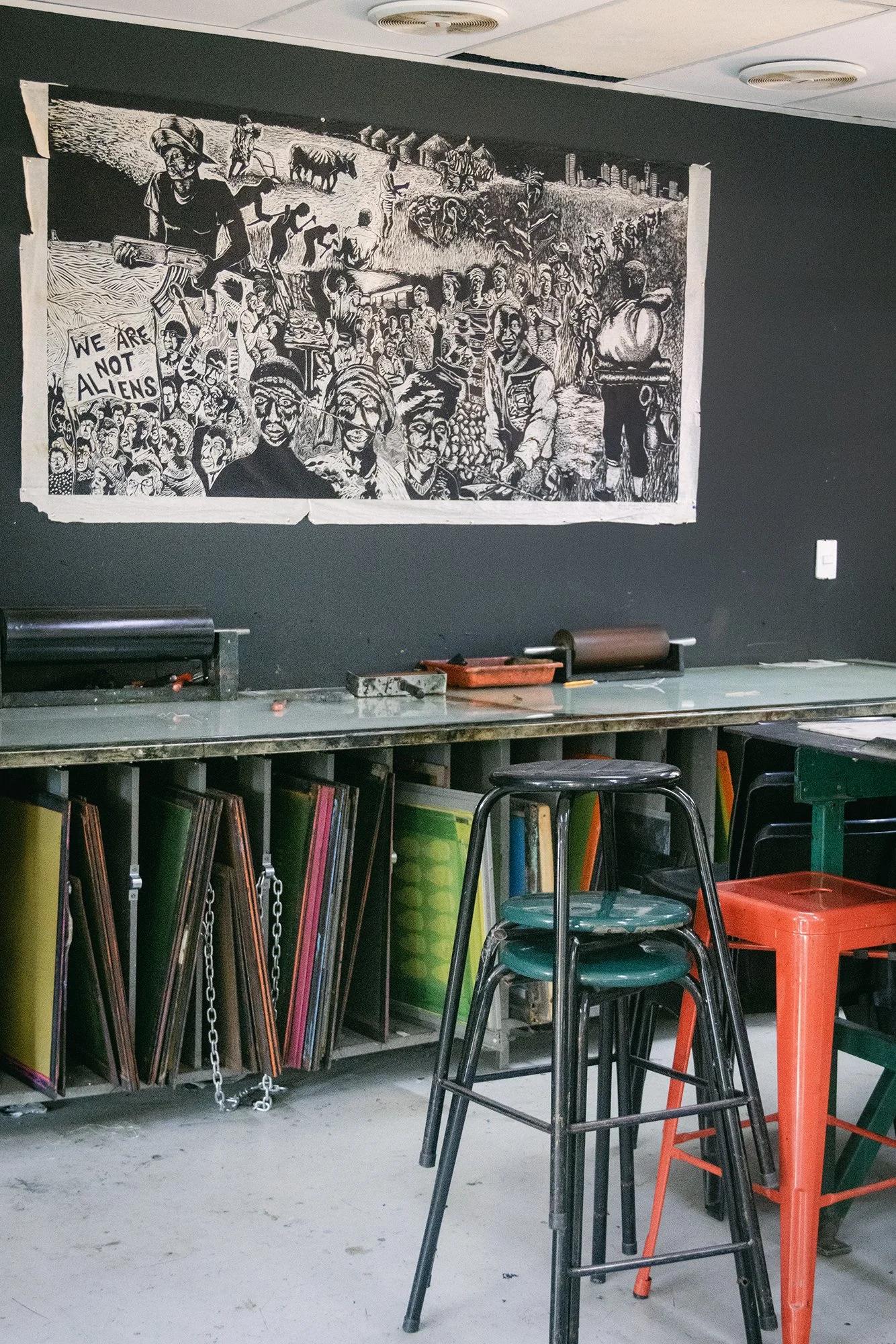
We were shown through the professional printshop and the educational facilities by Nkosana Nhlapo, one of the studio's registrars and technicians (and a former student of the program himself), who moved us through each space and helped us understand how the different facets of the organization intermingle and support one another. The professional studio is where APS's collaborative model lives: intaglio and etching, relief, lithography, screenprinting, facilities for producing works with invited artists. While the educational spaces are where student of their four-year program learn everything from the technical aspect of editioning prints through to the business, administrative and communication skills required to sustain a career in the arts.
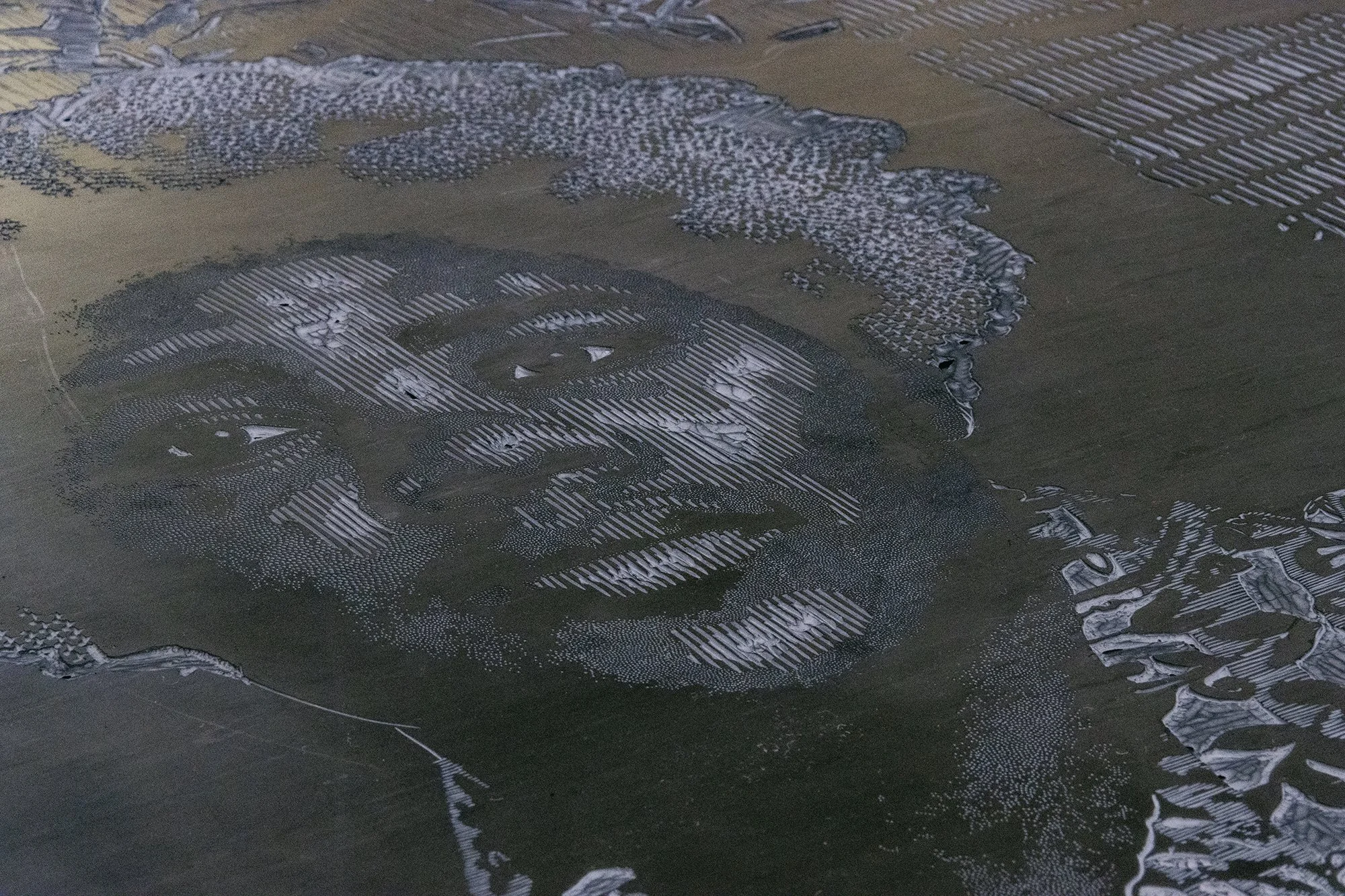
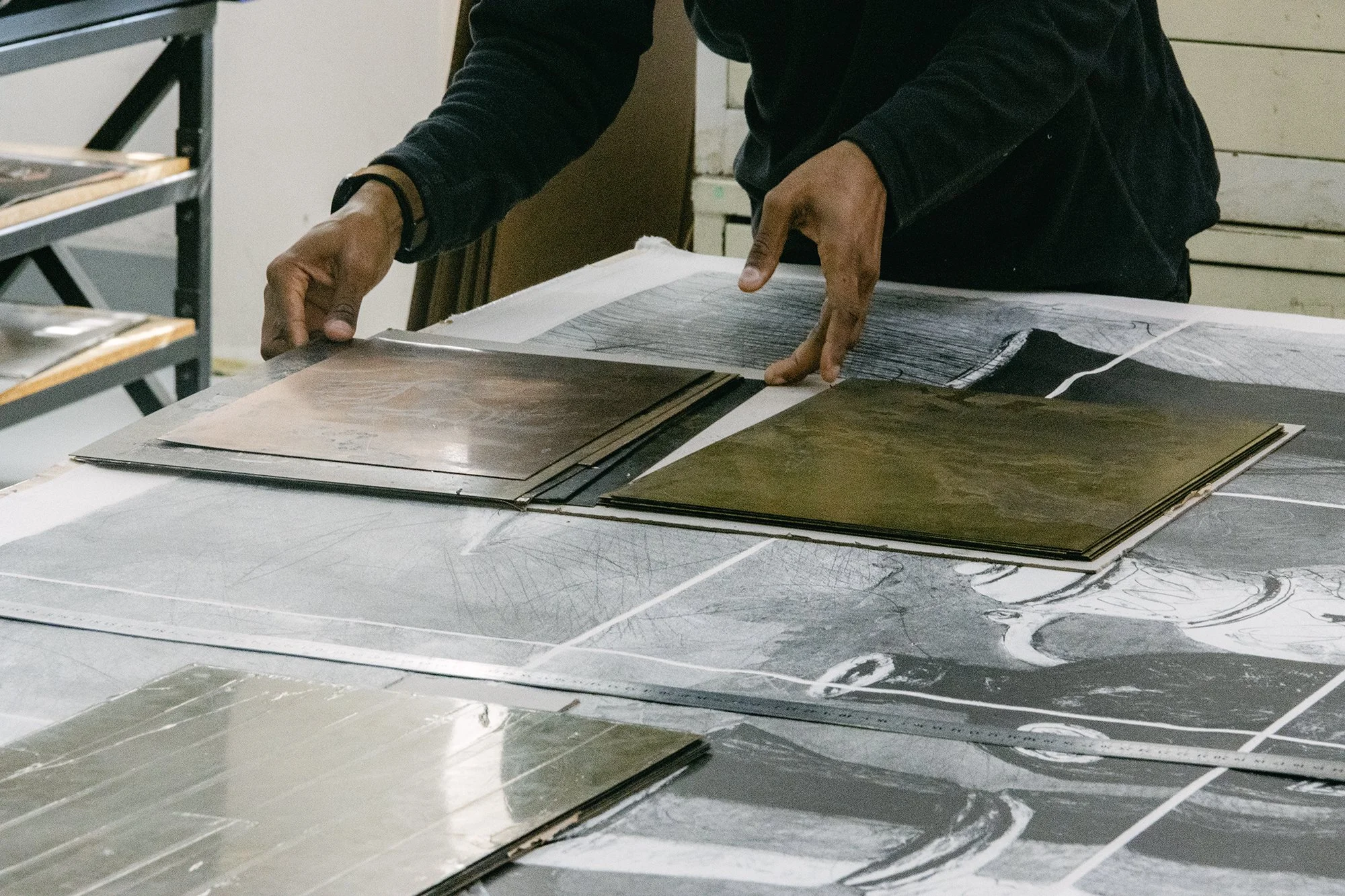
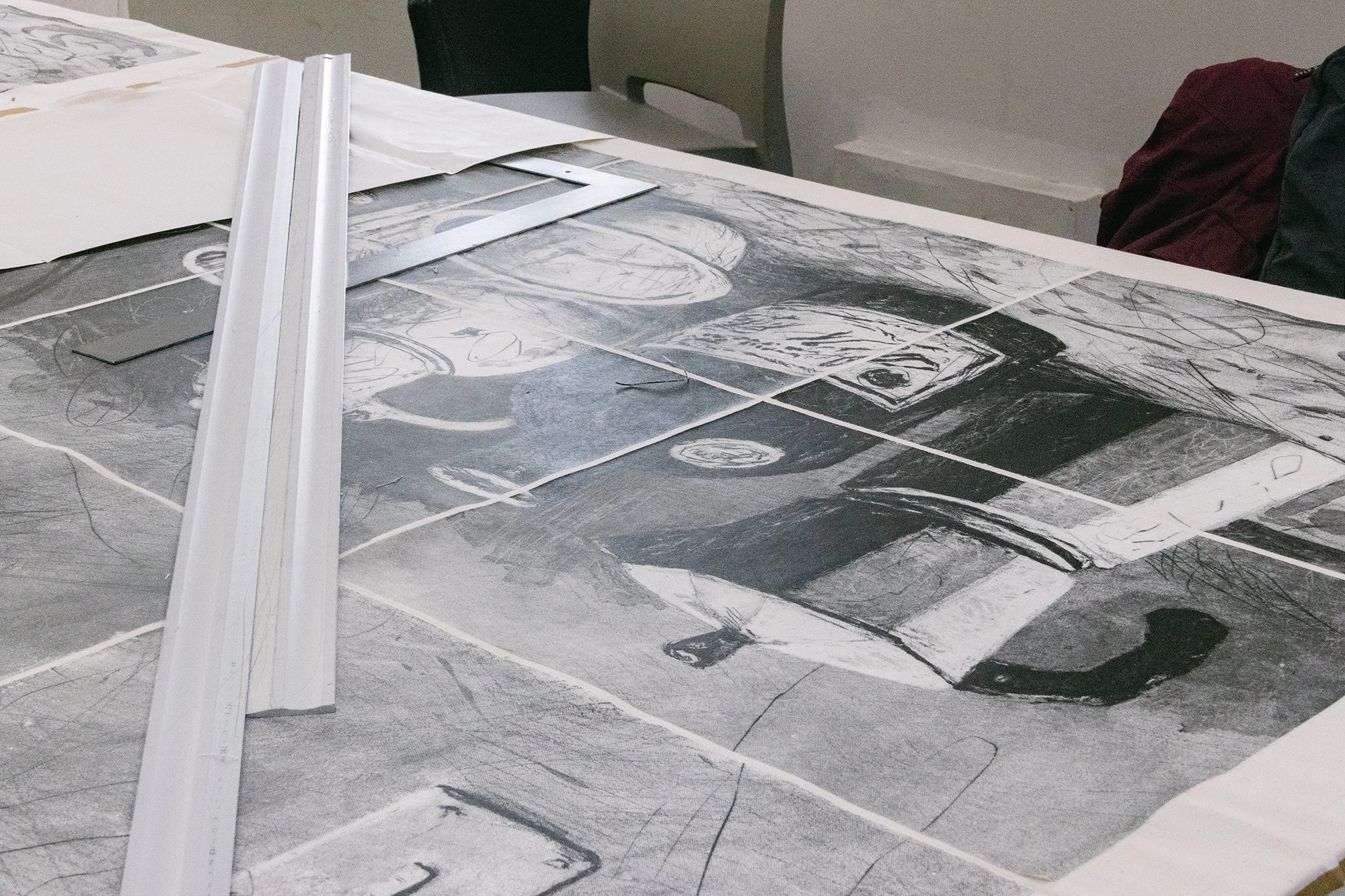
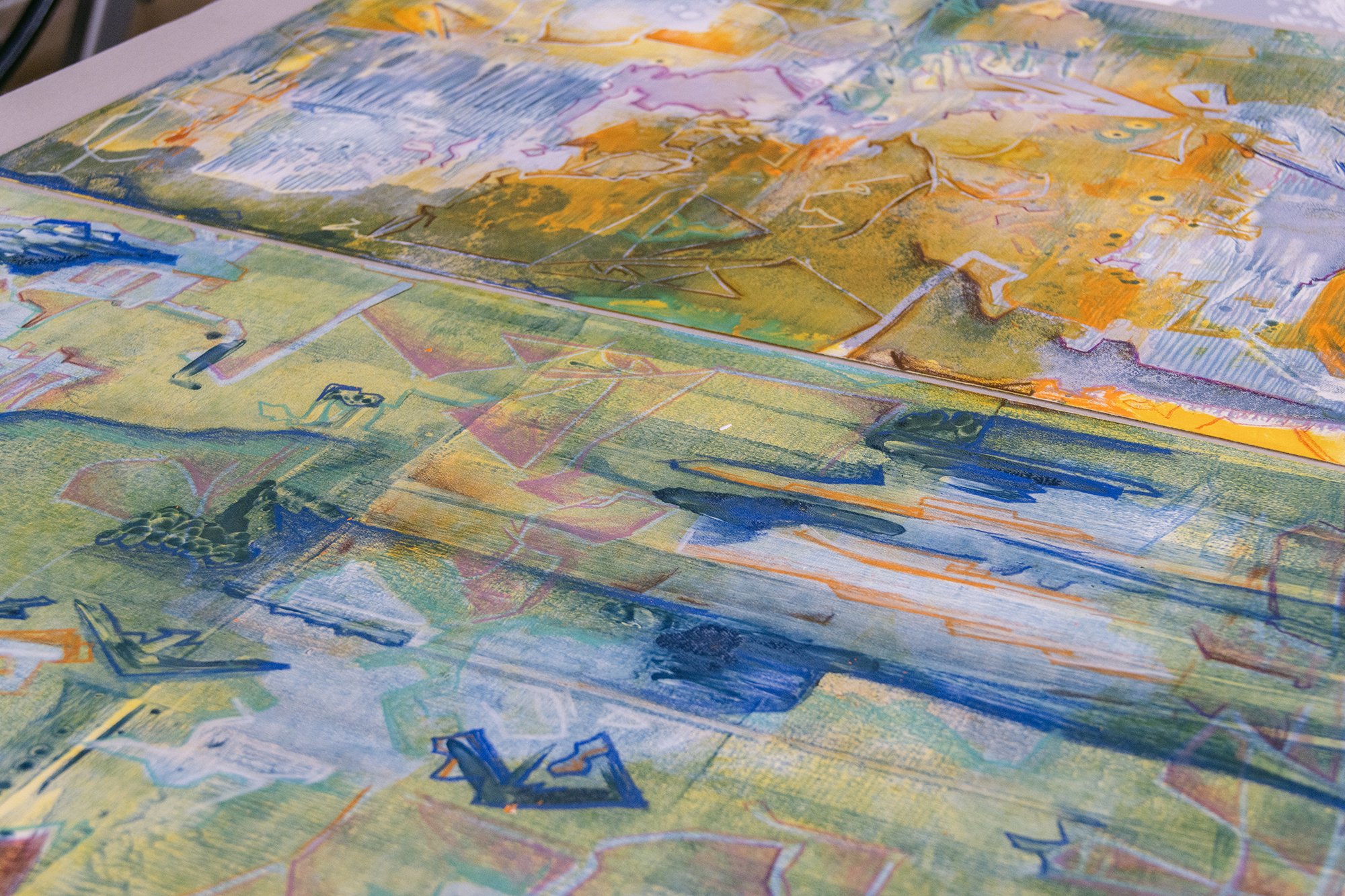
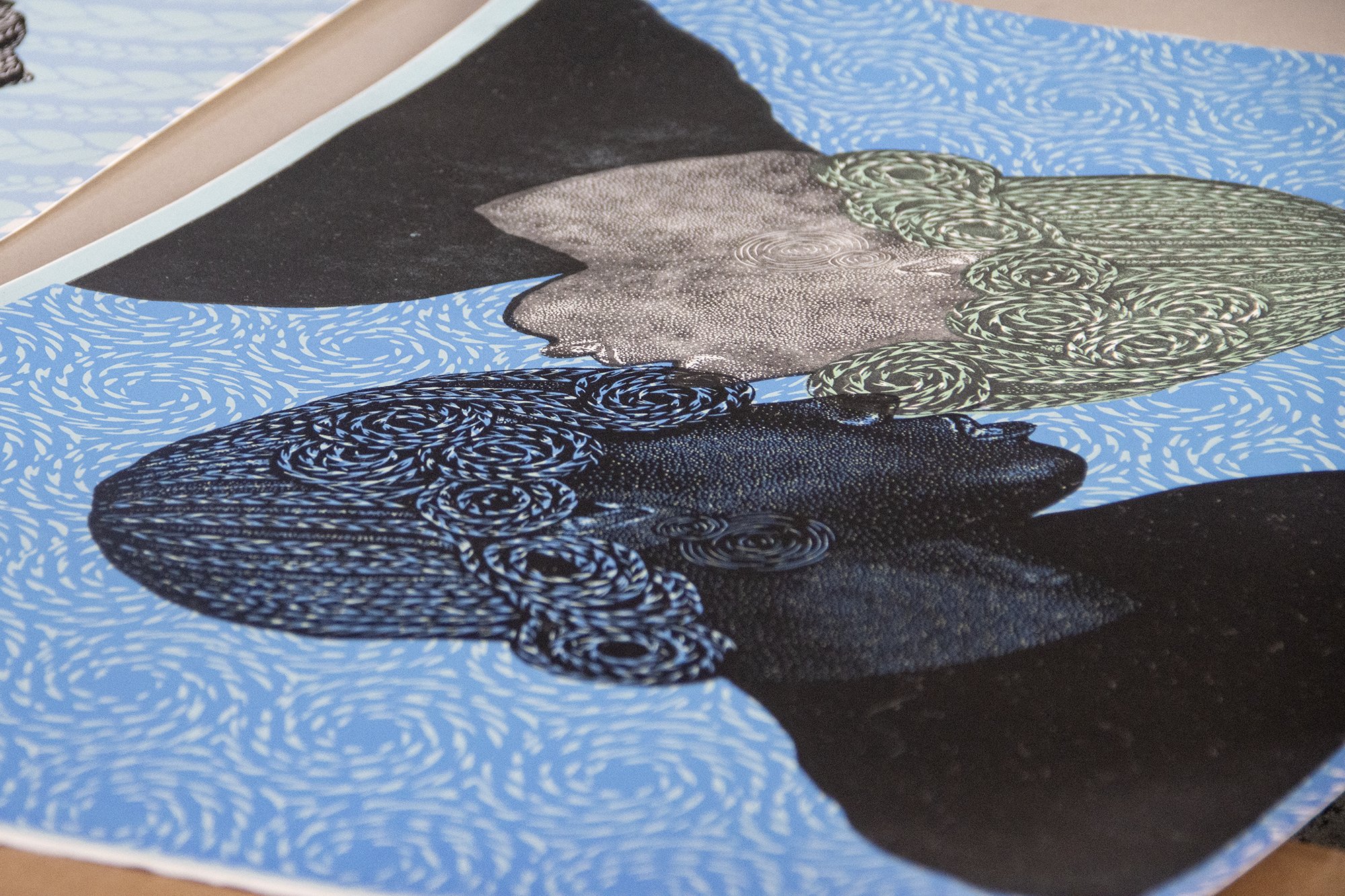
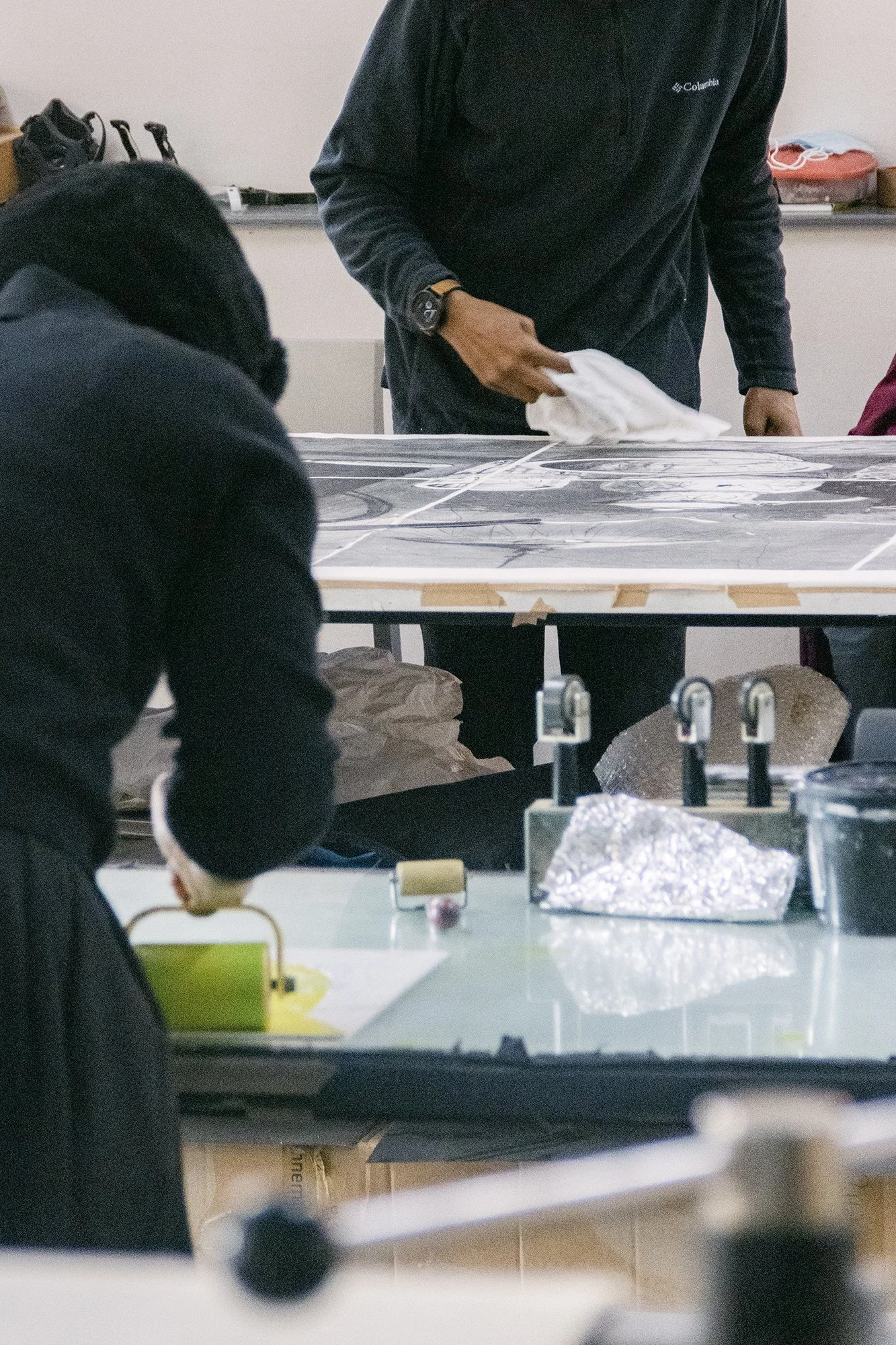
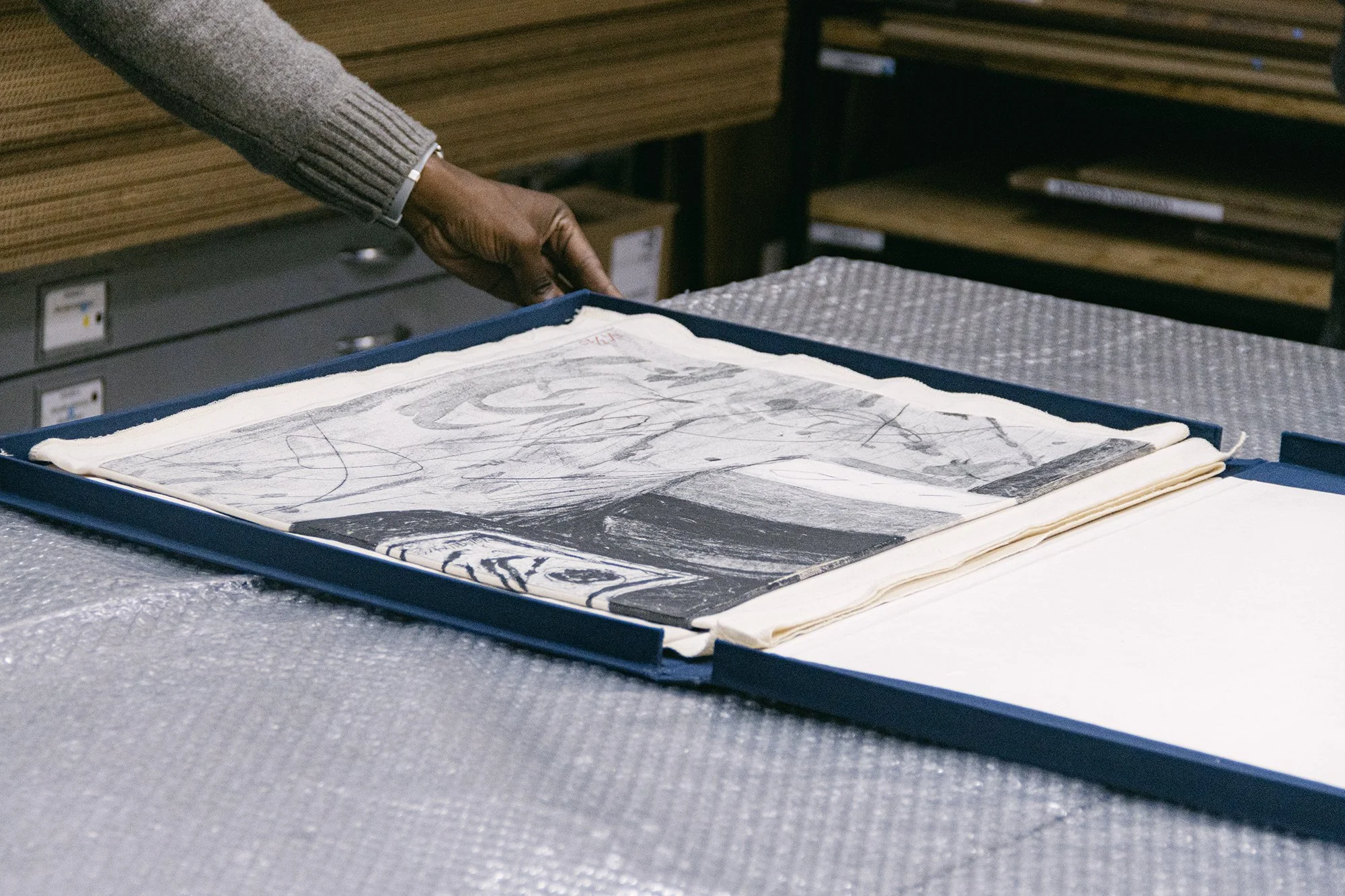
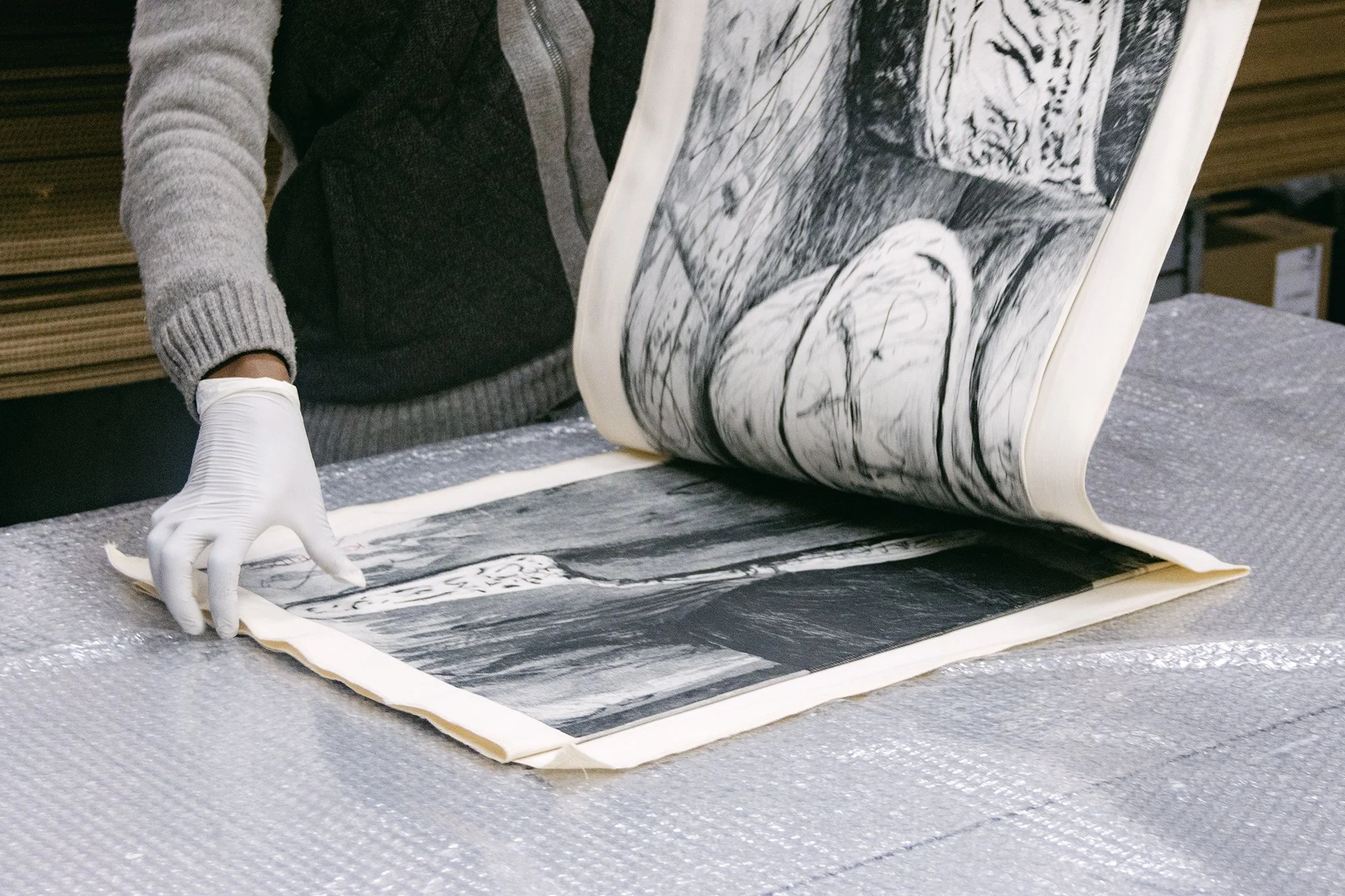
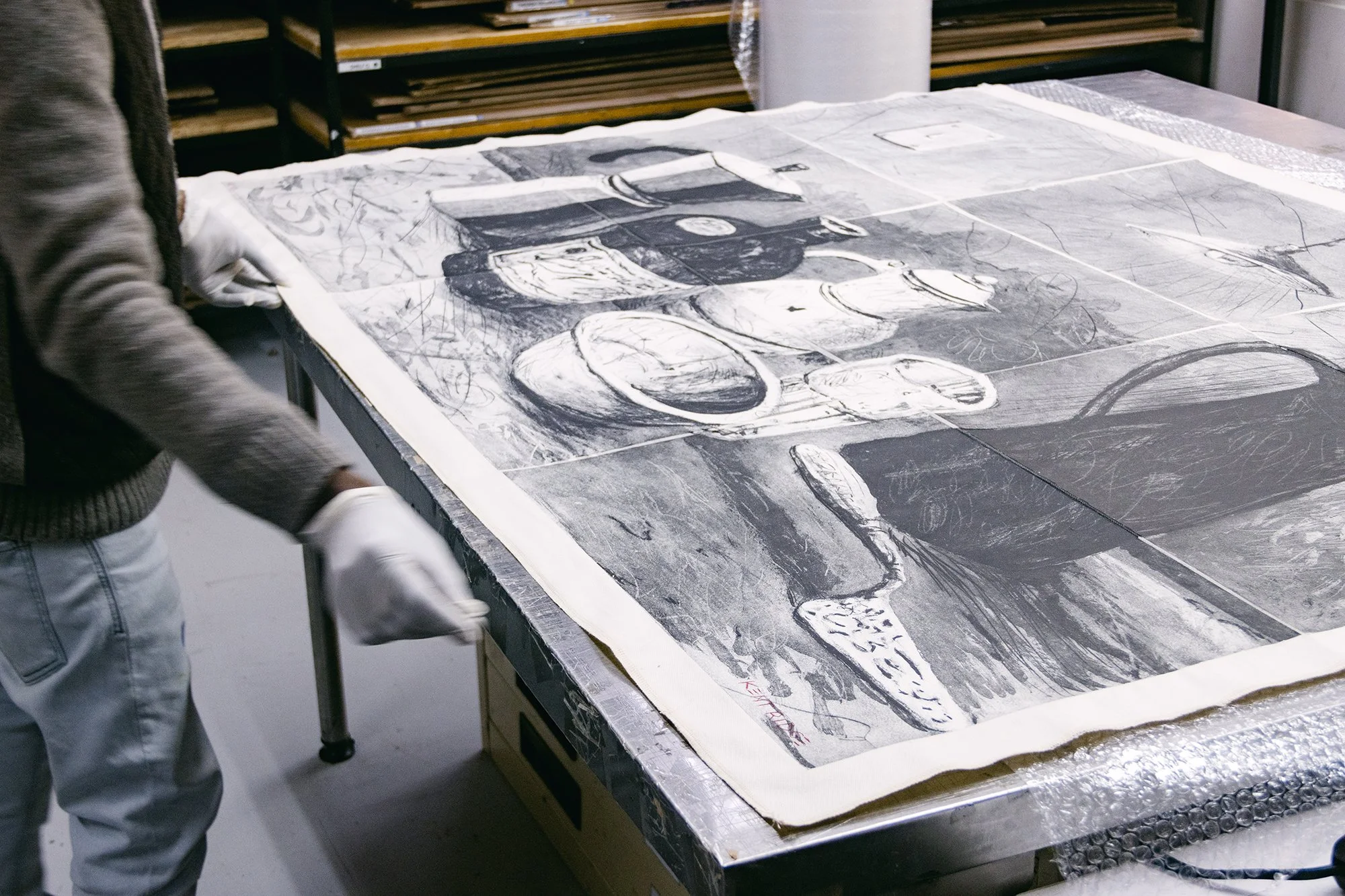
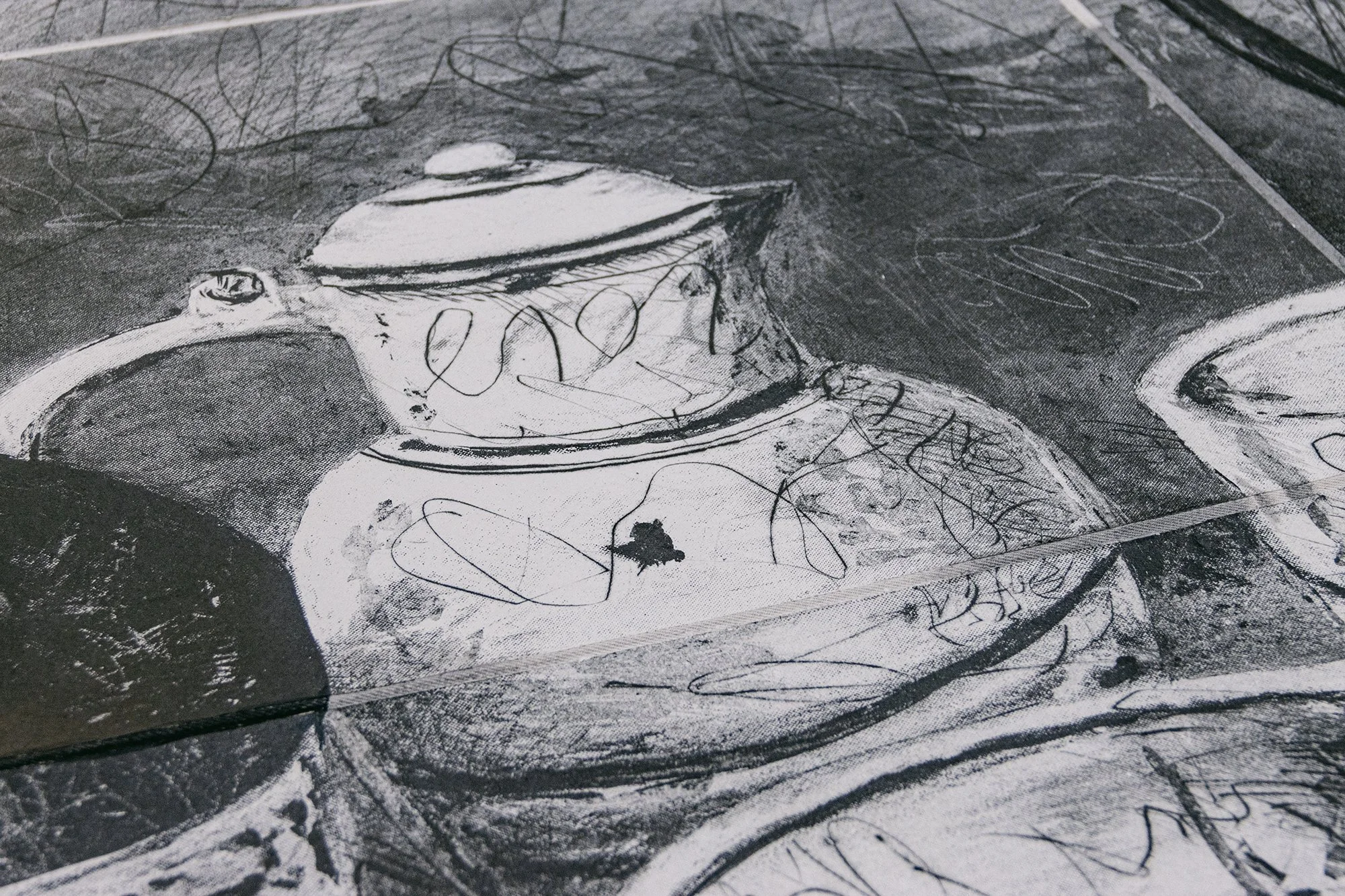
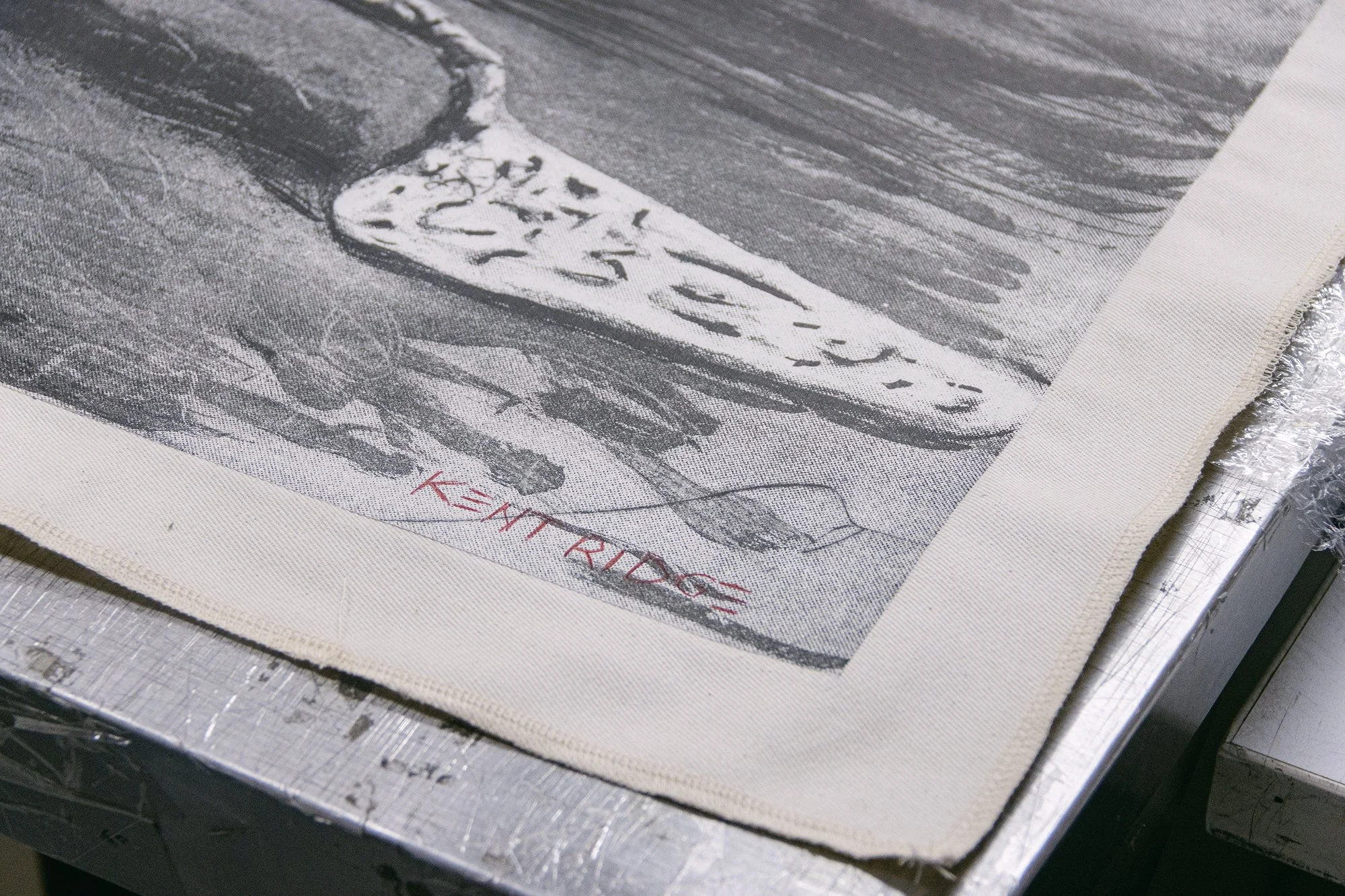
The presses were busy with current edition projects. We watched work progress on a new William Kentridge print that we would see unfolded in full later that day, and on a combined relief and screenprint edition by Lebohang Motaung — an APS graduate whose career now runs internationally and who continues to collaborate with the studio.
Afterwards we sat with Kim Berman, and the conversation turned from the presses to the plan: how the studio sustains itself, how it balances its education mission against a working commercial studio, where it wants to be in the decades ahead as Kim begins to step aside and the directorship shifts. We have never had a studio visit turn so readily to government policy and the influence of a country’s geopolitical forces on the arts — the funding, the trade, the shifting political weather that has, at various points across three decades, both propelled the studio forward and held it back. And yet what carries through every part of the conversation is an enduring optimism and a commitment to the mission so unwavering that we left certain there are another thirty-five years in it. APS has never treated artistic excellence and social purpose as competing goals; it treats them as the same project, funded by the same work.
The moment that stayed with us came when Kim drove us around some of Johannesburg’s galleries later in the afternoon. We kept encountering the work of graduates from the APS program who are now established across the city's contemporary scene, as exhibiting artists, as printmakers, as fixtures of a market that barely existed for them a generation ago. You do not always get to see the downstream impact of an institution's work laid out so plainly but Kim was constantly mentioning who all has passed through the doors at APS and were now on the gallery walls.
That is the real reason a studio like this matters to how we work and view printmaking broadly. Provenance, in art, is usually discussed as a matter of authentication. But there is a deeper provenance — the question of what a work is part of: whose hands, whose training, whose thirty-five-year experiment in what print can do for the people who make it. A print from Artist Proof Studio carries that lineage and is truly a piece of the greater South African story.
Learn more: artistproofstudio.co.za
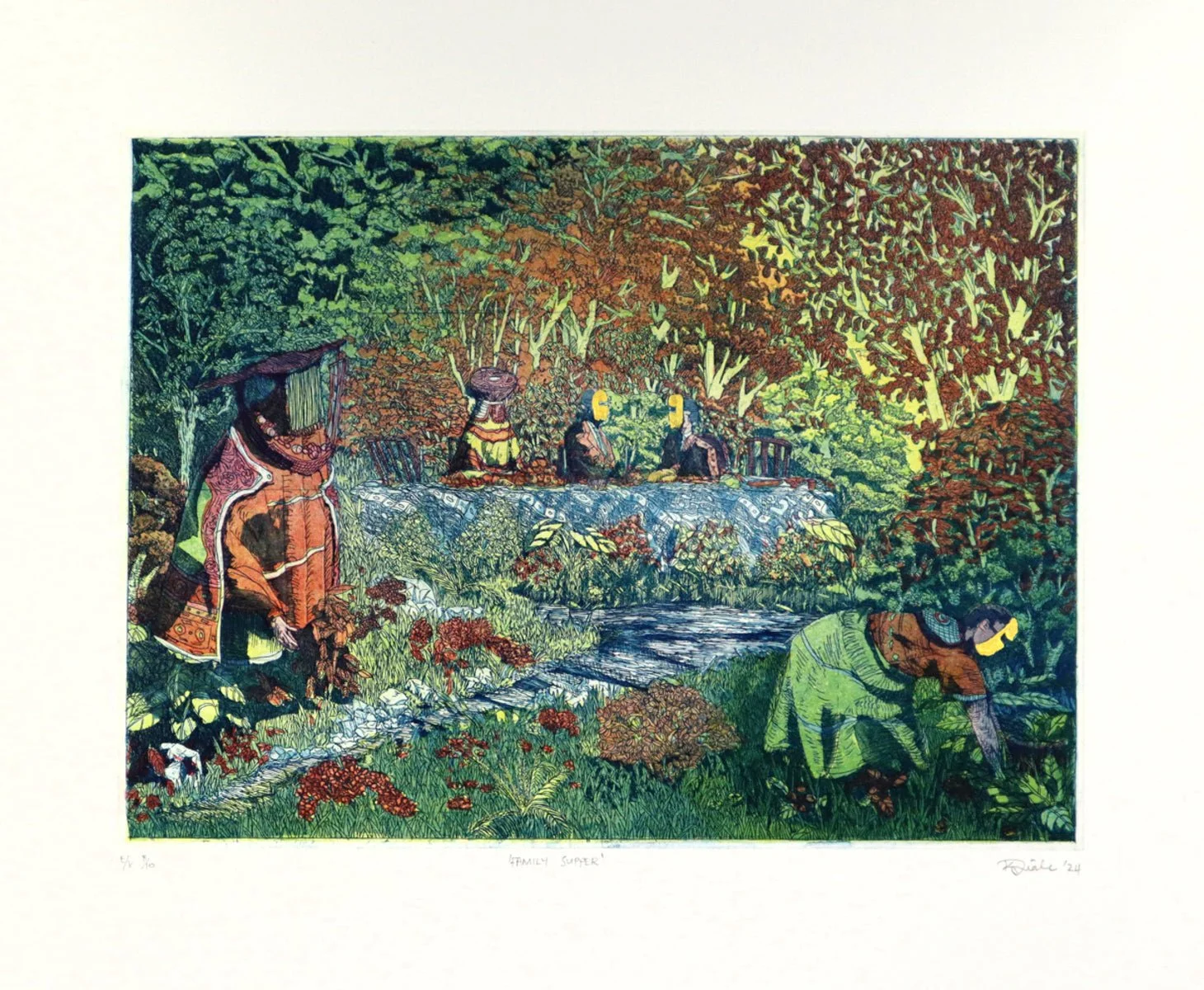
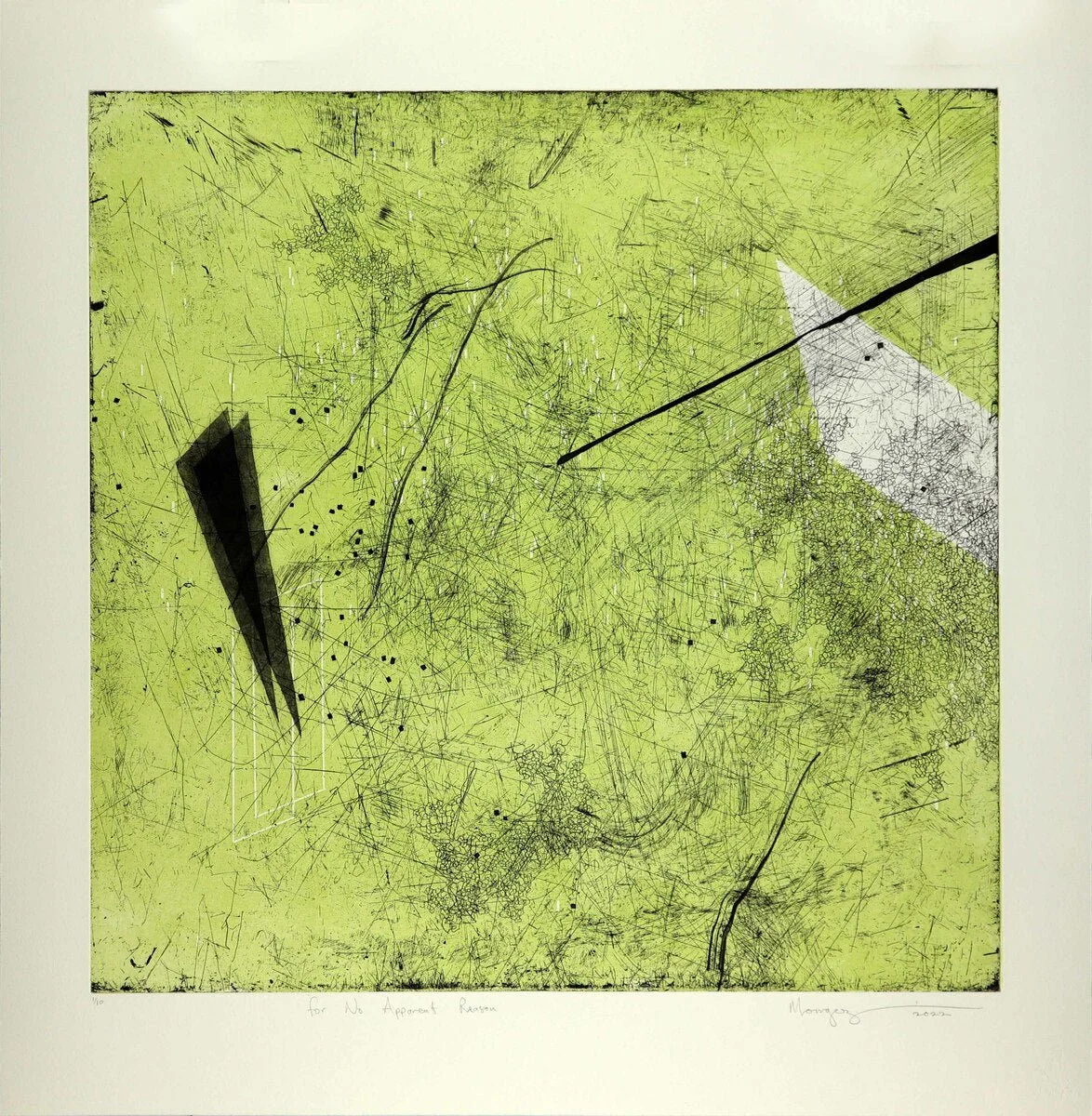
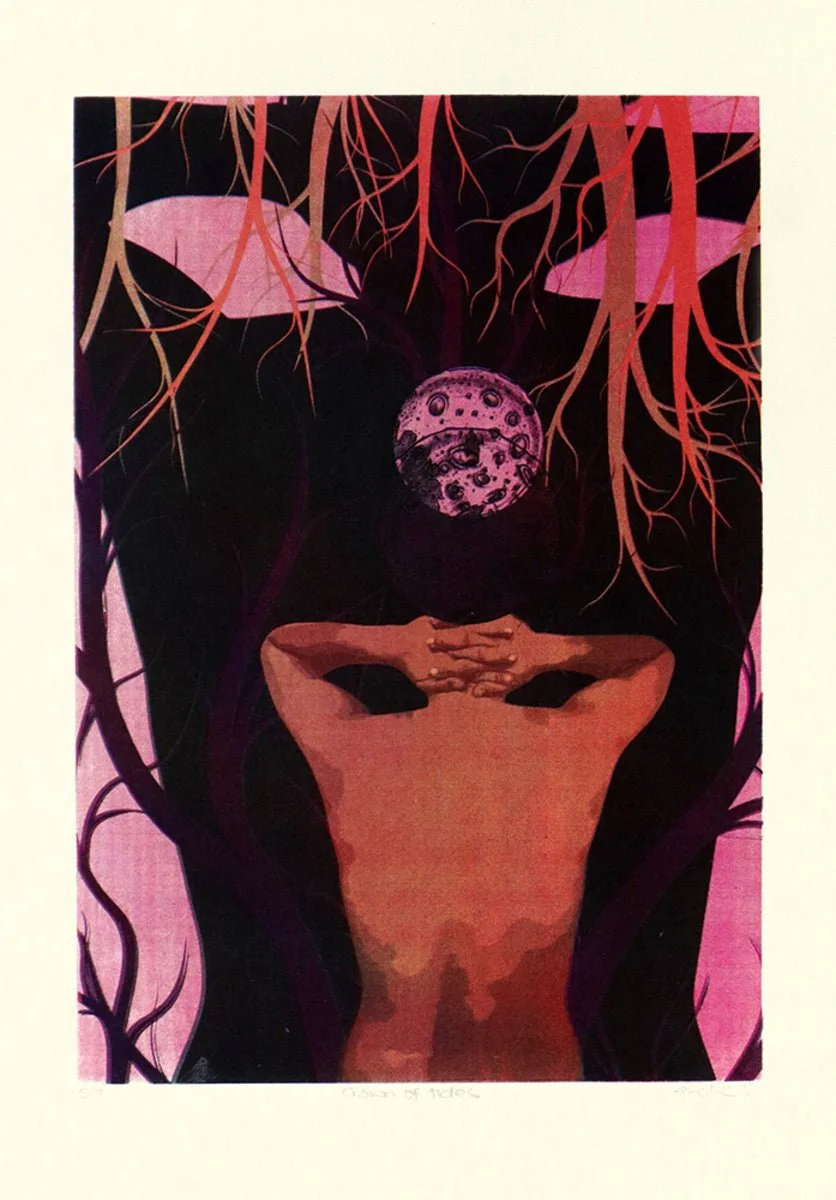
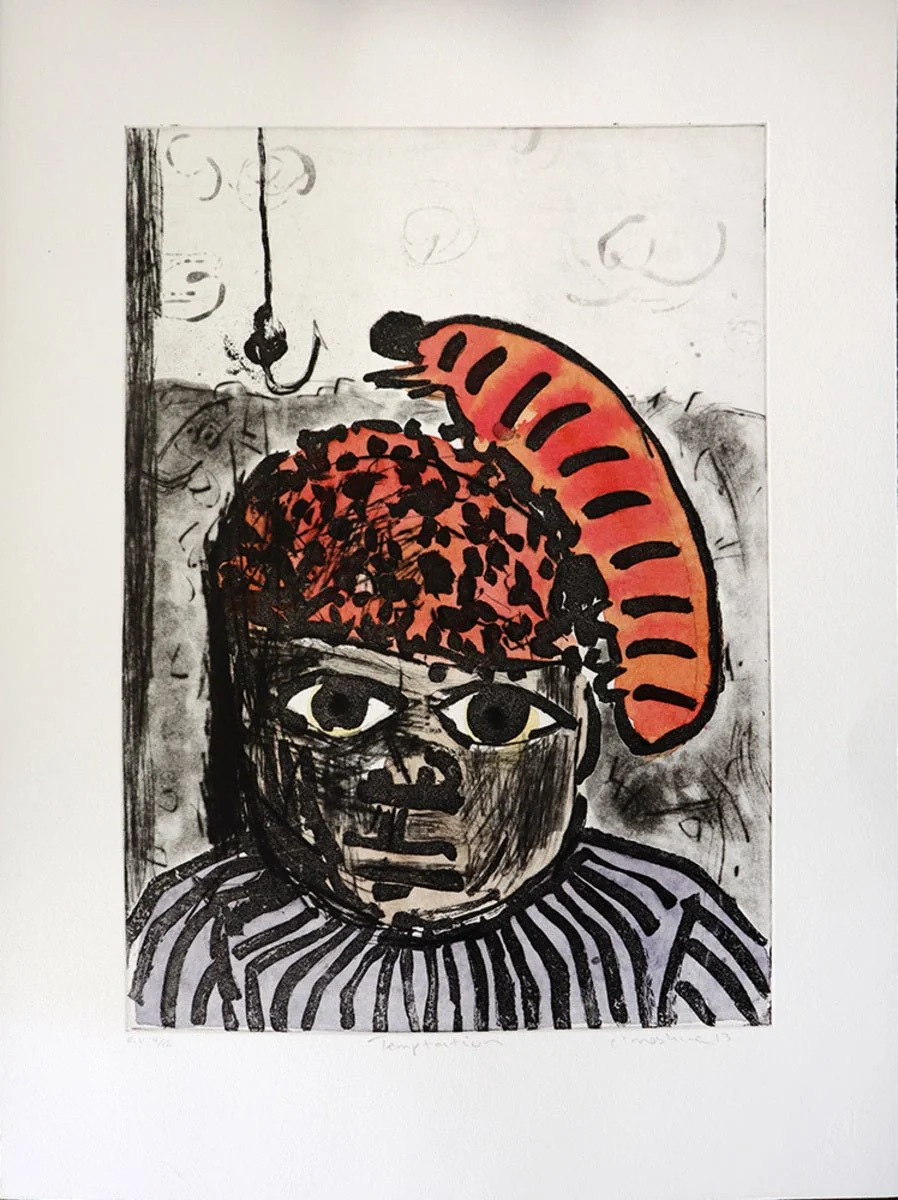
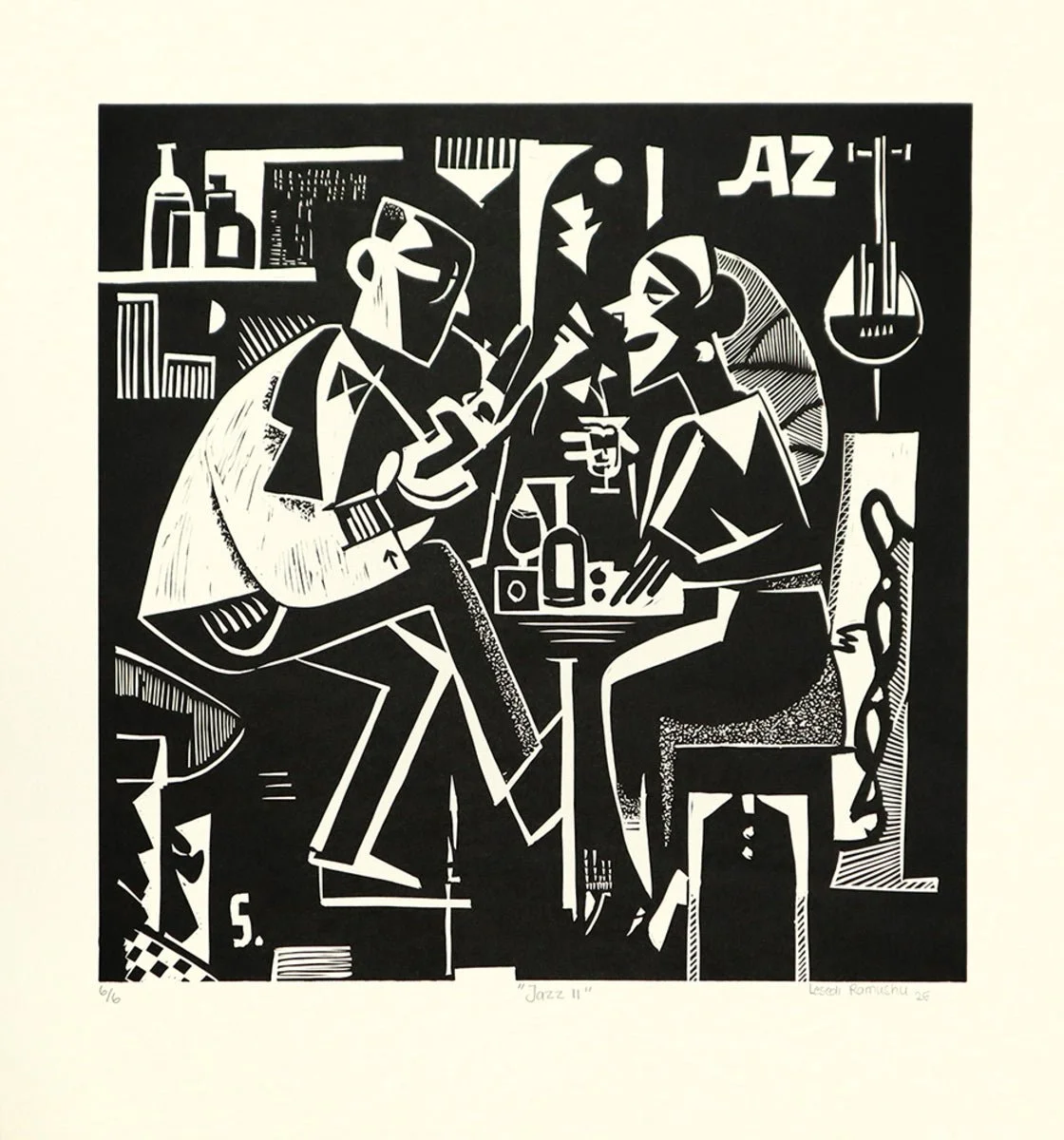
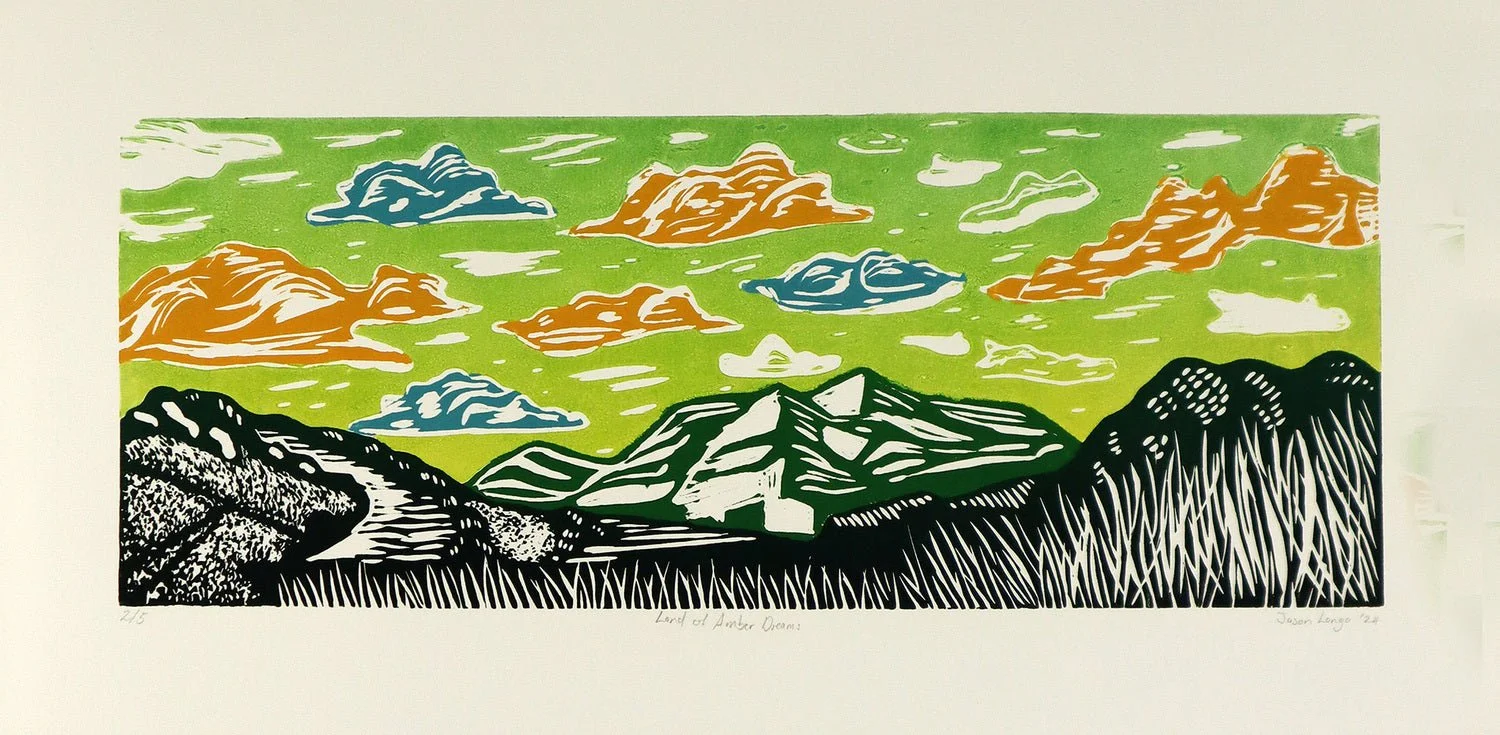
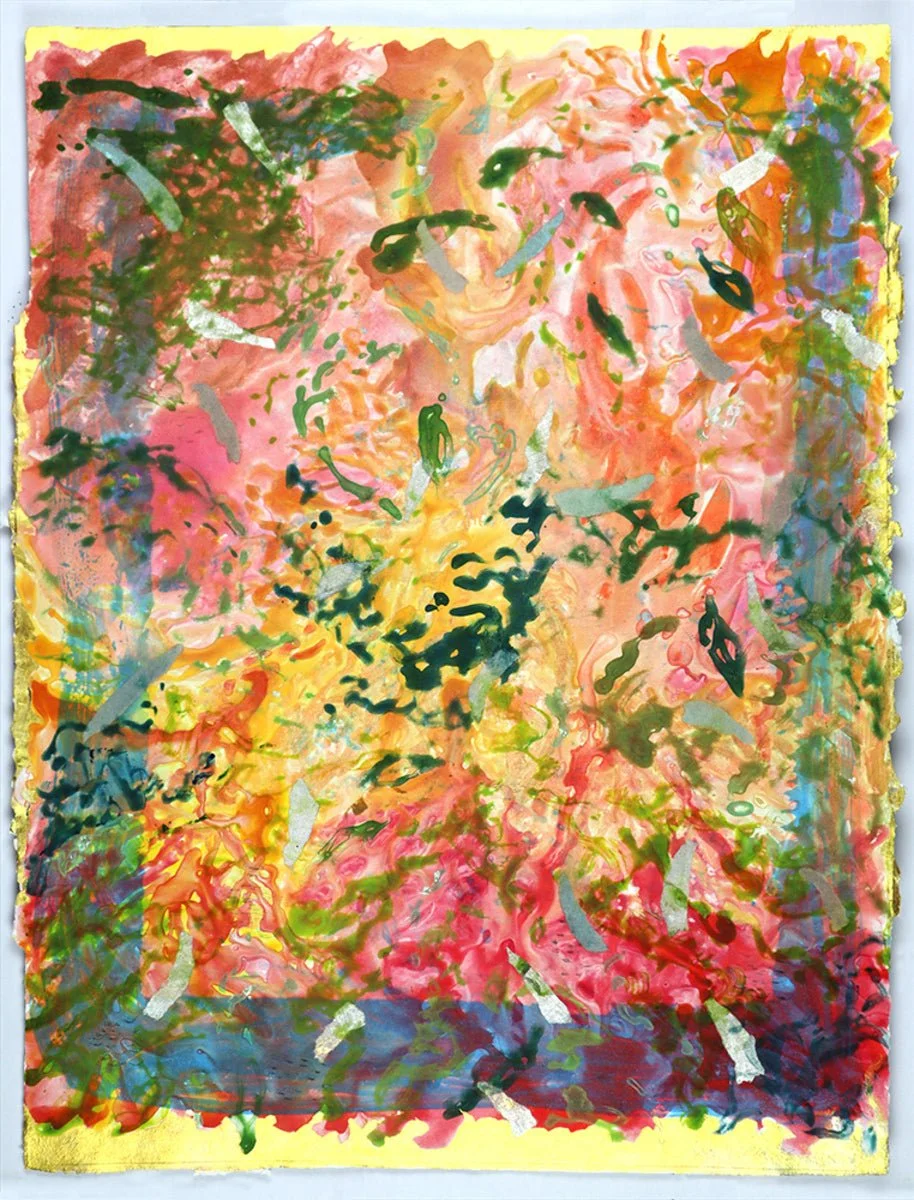
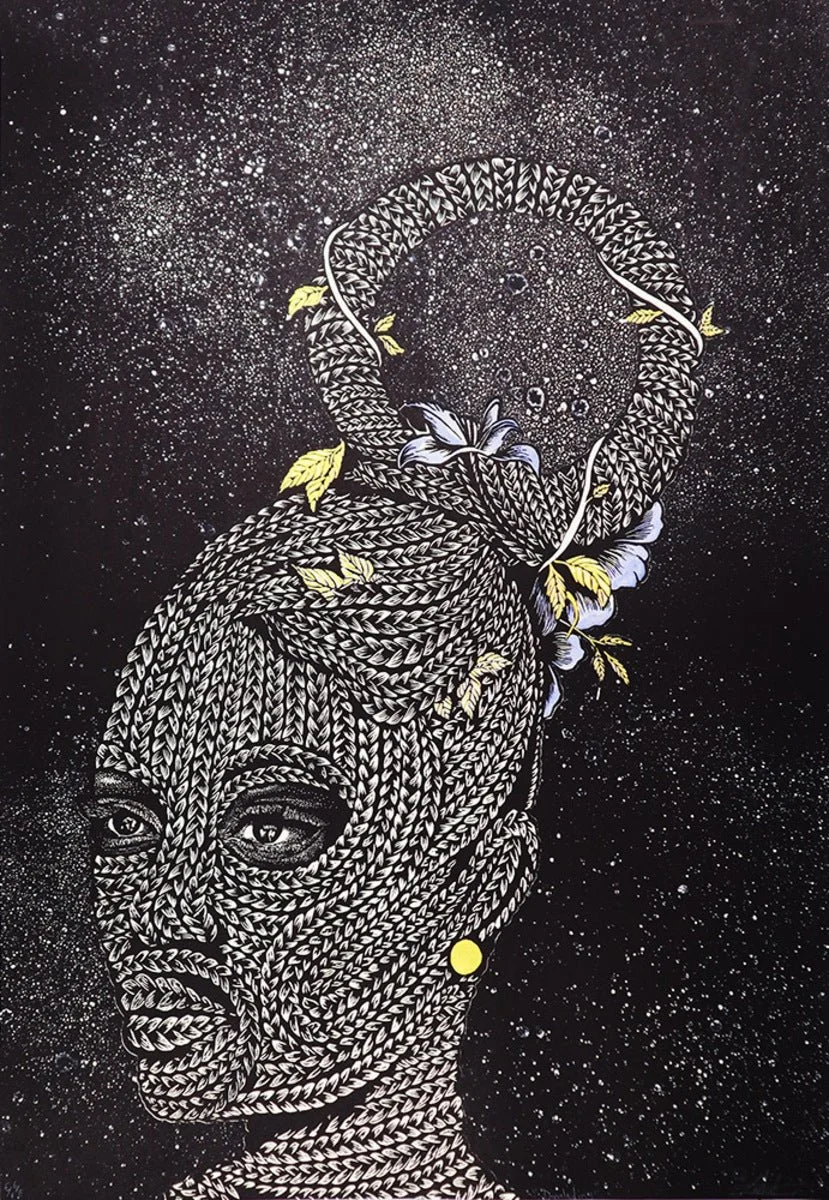
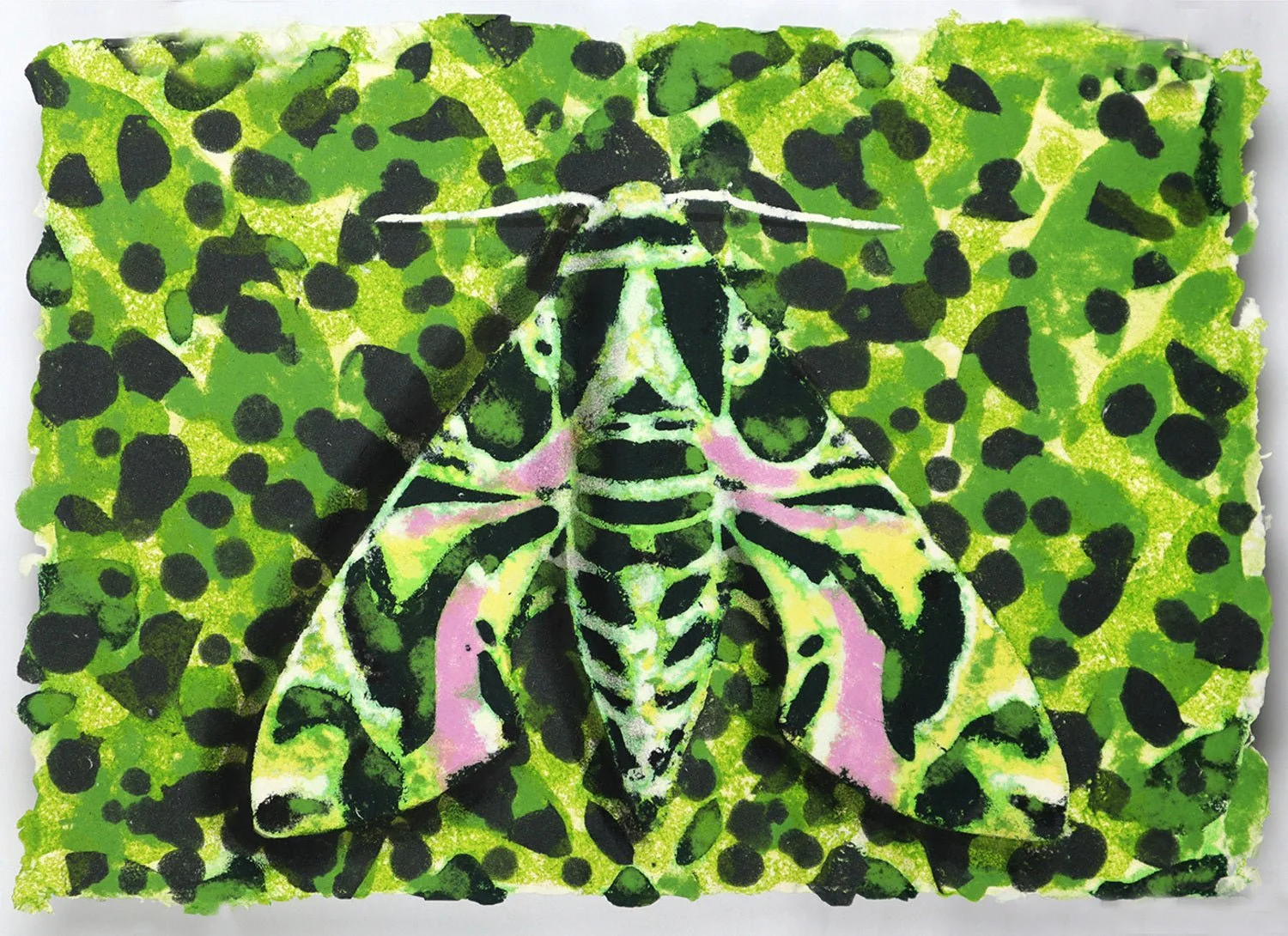
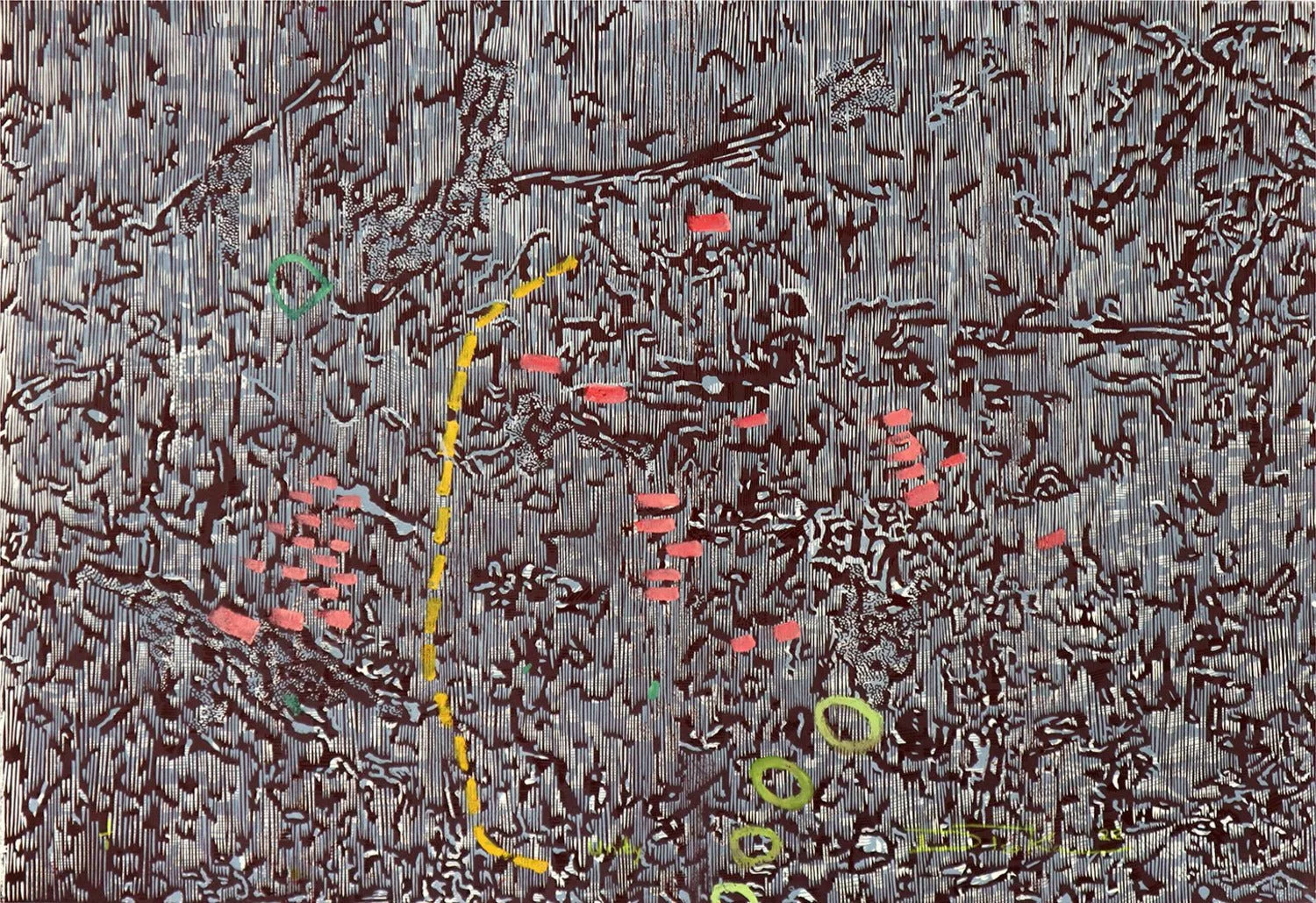
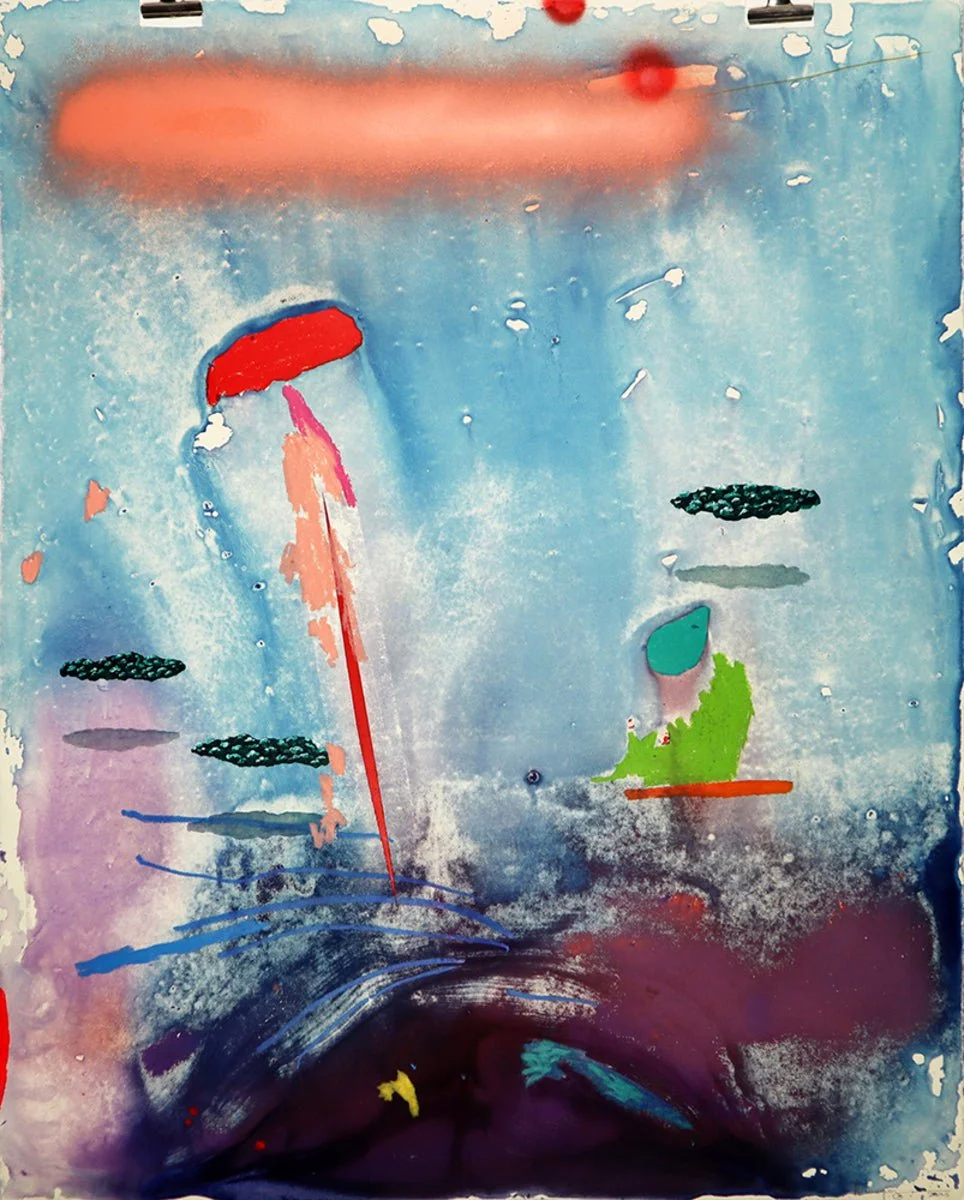
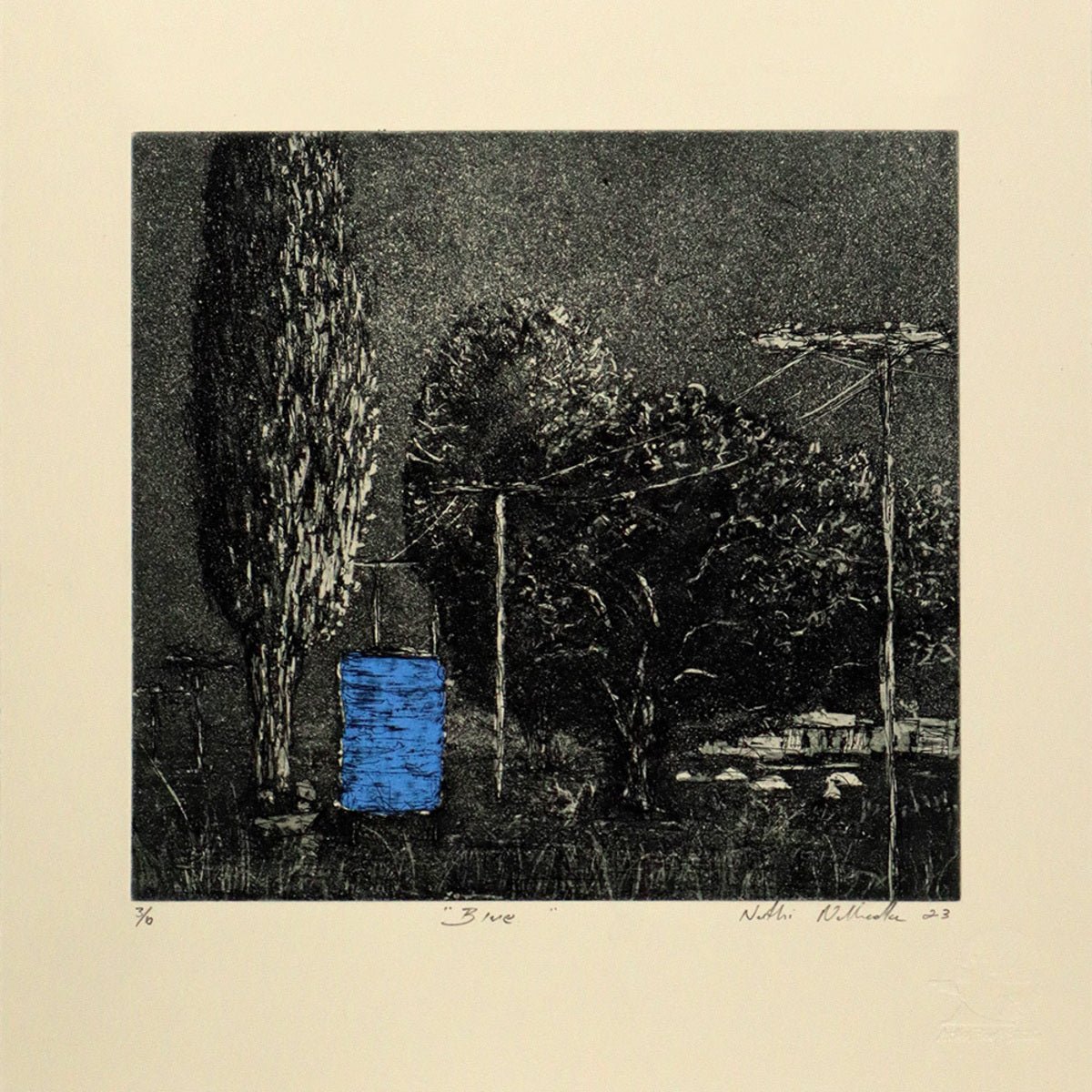
Selected Works from Artist Proof Studio
A curation of our favorite pieces currently available through their online store: