
Having the First Art Conversation Early
Something we’ve seen play out before is that by week thirty of a project, the client has decision fatigue, the art budget has quietly shrunk, and designers are left sourcing art options that are less than ideal.
In this moment there is often a scramble, some online platforms get searched and a few galleries get emailed. Ultimately an artwork is selected that is fine, and that nobody will complain about. Then the designer moves on to the next project knowing, privately, that it could have been something more exceptional.
The frustrating thing is that this isn't a sourcing problem. Access to art has genuinely never been easier; Artsy, galleries with responsive teams, artists who are reachable with the right introduction. The problem is really timing. Art entered the process too late to be considered properly, and by that point, the time-consuming process of understanding the brief, developing a thesis, identifying specific artists and sourcing routes, managing commissions with realistic lead times is realistically off the table.
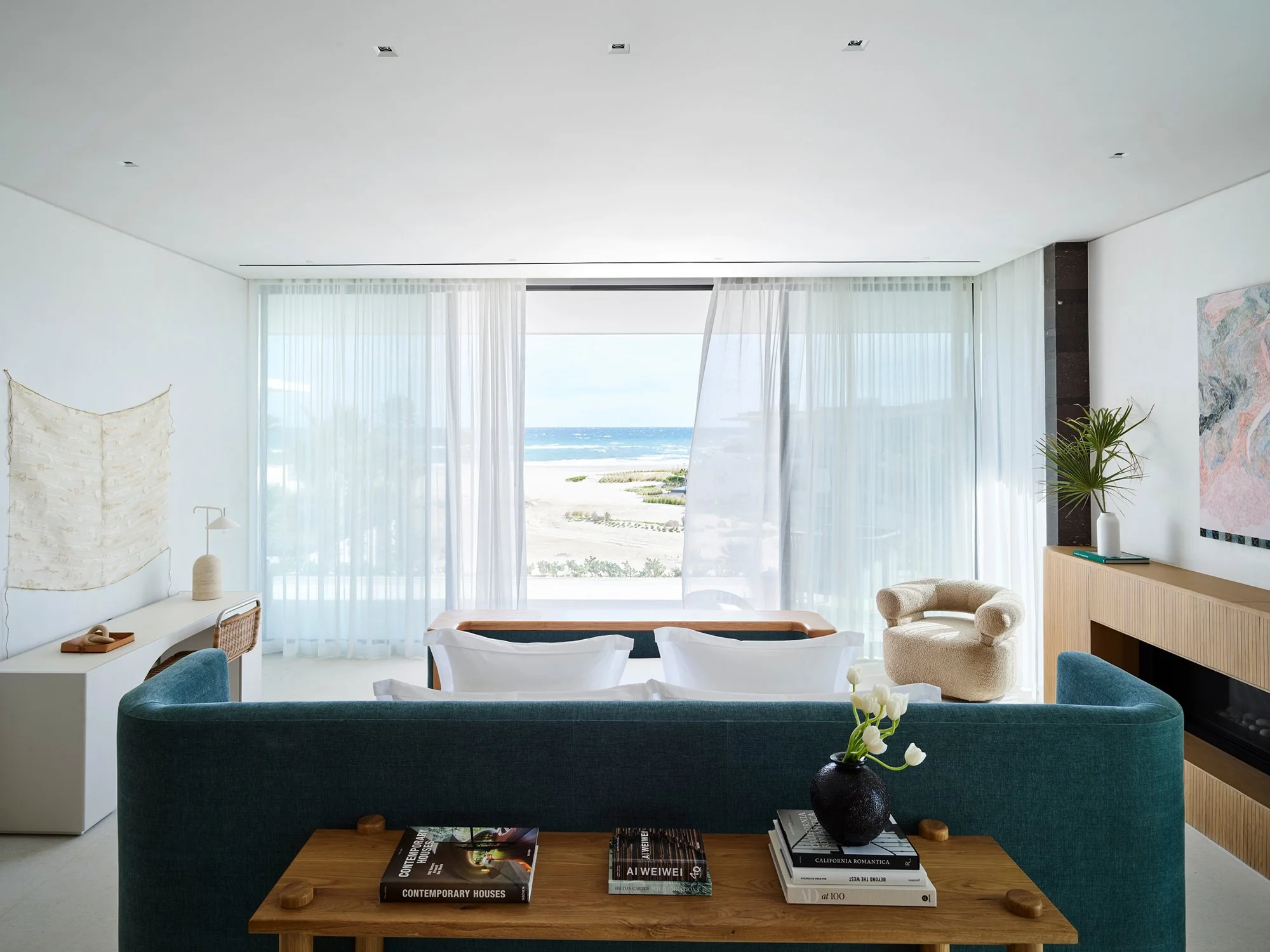
Custom silk wallhanging commissioned from Ancan Studio (left), painting commissioned from Shiela Lauder (right) in the Primary Bedroom of private villa at Costa Palmas. Interiors: Abby Kuskin with Irongate. Image courtesy of Costa Palmas. Image Credit: Fernando Marroquin.
What Late-stage Art Selection Actually Costs
The time cost for interior designers is well worth considering. For a luxury residential project with art sourced in-house during the final four to six weeks, you’re looking at around fifty to sixty hours of the designer's time. That accounts for the research, the gallery back-and-forth, putting together a client presentation, the approval cycles, the logistics. All of this happening while the project is at its most demanding across every other front.
Those hours are not going toward thinking or reflecting. They're going toward the mechanical tasks of sourcing, which is work that a specialist consultant undertakes more efficiently precisely because it's our entire job, not an additional item on a very long to-do list.
The budget often erodes in parallel. Art allocations on luxury residential projects typically sit at 3-8% of total project value — on a $2M project, that's a $60,000–$160,000 figure on paper. But by week thirty, that figure has usually been quietly pressured by scope changes and late-stage costs elsewhere in the project. A working art budget of $80,000 at the start of the schedule is often a working art budget of $60,000 in practice, being spent in six weeks instead of twelve, with reduced negotiating leverage and less time to wait for the right piece to become available.
And then there's what's actually left to acquire. The most compelling works — the ones by artists building serious reputations with real collector attention behind them — have usually already sold. What remains is residual inventory. Residual inventory can indeed still be beautiful but it is rarely exceptional. And for a project that has been exceptional in every other respect, that gap is often visible.
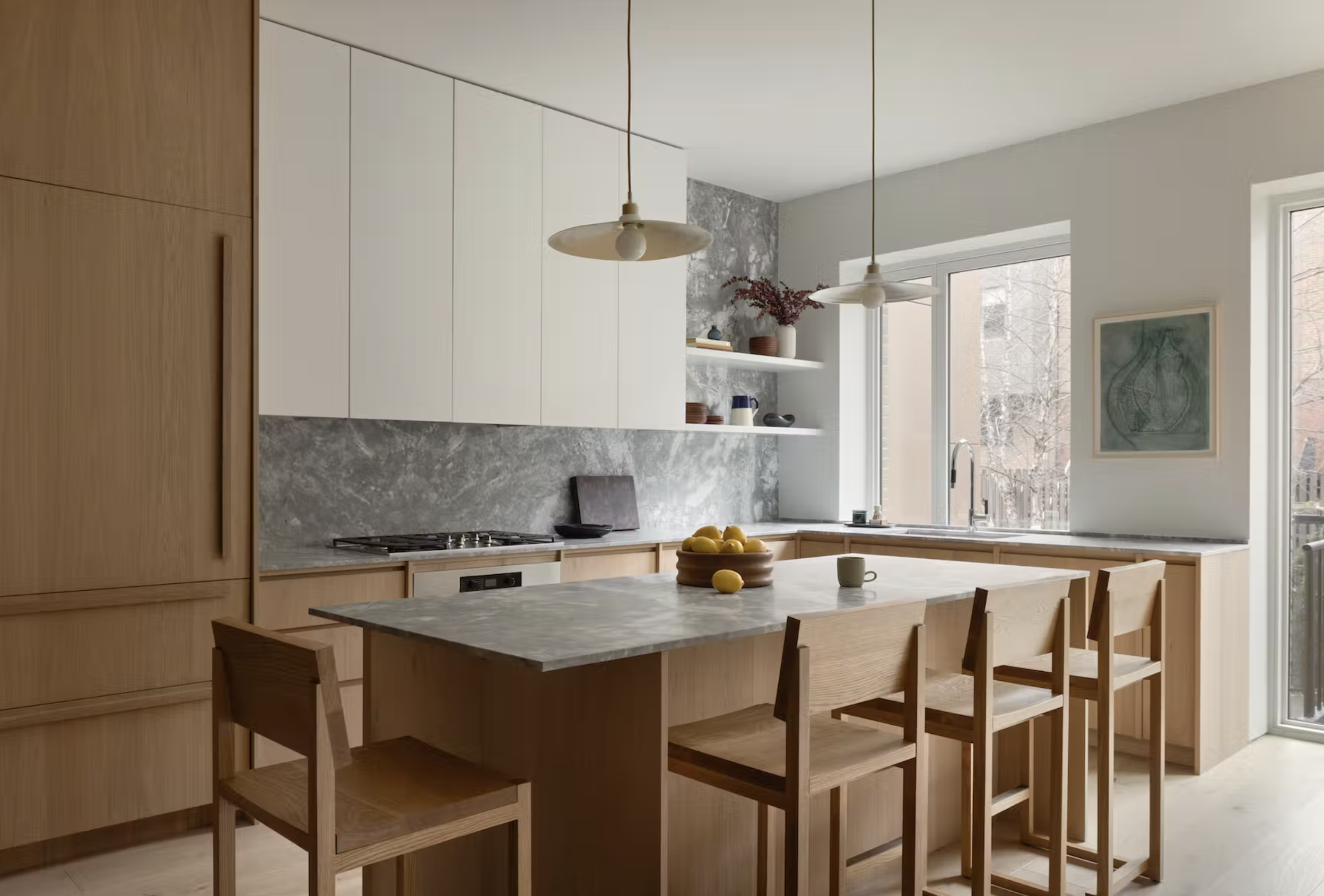
An Alyson Fox pastel rubbing featured in the kitchen of a Carroll Gardens townhouse. Interiors by Emily Lindberg Design. Photo: Eric Petschek
Why More Options Isn’t Always Better
When time is short, the instinct is to generate more options; search more platforms, more galleries, more references sent to the client. We completely understand this logic because you’te slightly panicked and this approach feels like thoroughness.
But a client who has been making significant decisions for thirty weeks is running low on the cognitive bandwidth that good art decision-making requires. They're not in a state for open-ended discovery. They don't want to evaluate forty prints against a brief they half-remember. What they want, and what actually moves the project forward is three considered options, presented with a clear argument for each, by someone who can answer every question that follows without hesitation.
That presentation doesn't come from a platform search at week thirty. It comes from a studio that has been thinking about the project for twenty weeks. That knows which artists are appropriate and why. That has already worked out the sourcing route and the timeline implications. That can engineer a budget across gallery acquisition, artist commission, or custom production depending on what the brief actually calls for.

Paintings by Kamrooz Aram (left) and Sarah Awad (right) in a private residence in Woodside, CA. Interiors: IDF Studio
What Can Shift When Art Discussions Begin Early
When we're brought into a project from design development — which is how we prefer to work and increasingly how our best projects happen — the changes aren't just logistical. The whole quality of the outcome is different.
The brief gets sharper.
The intake questions we ask at the start of any consulting relationship are simple: What is the narrative of this space? What is the client's relationship to art — are they collecting seriously, casually, or for the first time? What is the working budget, and how do we want to allocate it? But the answers to those questions change everything downstream.
A recent penthouse staging project is a good example of how quickly a strong conceptual anchor collapses the sourcing problem. The brief that emerged from those early conversations pointed clearly toward the mid-century women artists of New York: Lee Krasner, Joan Mitchell, Helen Frankenthaler, the generation that defined Abstract Expressionism and is still, frankly, undervalued relative to their male contemporaries. That reference gave us a thesis and from there the selection criteria wrote themselves: scale, gesture, a particular quality of surface, a specific relationship between colour and edge. We weren't searching for something that works in the penthouse. We were searching for work that either belonged to that lineage or spoke to it in a contemporary register. This is a very different, much faster, much more defensible process. The client understood every recommendation immediately because the brief had given them the vocabulary to receive it.
Commissions become a real option.
A commissioned work for a significant residential or hospitality project needs twelve to sixteen weeks minimum — more if scale is involved, more again if the artist is in demand. If art enters the brief at week six, a commission is entirely viable. If it enters at week twenty-four, that same commission becomes a risk the client won't take.
We're currently in early development on a hotel project in Mexico where the conceptual north star is the mythical siren; the world that a guest encounters when they cross the threshold, will be the atmosphere of lure and transformation that the siren represents. That kind of brief cannot be executed with acquired inventory. The works that will make those spaces feel like they were built from the inside out need to be commissioned or co-developed with artists who understand how the spaces are operating. Some of them will take months to develop, months to produce, and months to approve. The only reason we can pursue that properly is that we're in the room now, while the building is still being designed. By the time the interiors are resolved, the art will be ready to meet them.
The budget holds.
Art specified at the right stage can be properly costed and scheduled. Gallery pieces with lead times can be secured. Edition releases can be tracked and timed. Custom production can be priced with enough runway to make good decisions. None of this is available at week thirty with a compressed timeline and a reduced practical figure.
The project photographs better.
This is the point the industry tends to underweight, and we find it to be one of the most persuasive for designers who are building a media presence. An editor can see, in an installation photograph, whether the art belongs to the space intellectually or was placed to fill a wall. Art that was specified from the brief reads differently; it has a relationship to the room that is visible. Art that was sourced at install often doesn't, and no amount of styling covers that gap in print. For a designer who wants their work published, this distinction matters more than any individual piece.

Ceramic and textile wall relief commissioned from ceramicist Karen Tinney above the wet bar of a private villa at Costa Palmas. Interiors: Abby Kuskin with Irongate. Image courtesy of Costa Palmas. Image Credit: Fernando Marroquin.
The First Conversation
Bringing art discussions into week one of design development doesn't require the designer to have answers at that early stage. It really just requires asking different questions and asking them earlier.
The conversation we have at the start of a project is deliberately low-pressure. What is the space trying to do? What's the client's relationship to art? What is the actual working budget, and is there flexibility in how it's allocated?
From those three things, we can build a brief where we identify the right artists and the right approach. From there, the timeline structures itself around what the project actually needs rather than what happens to be available at the end.
It's a short conversation but the timing of it is everything!
We're not saying art sourcing is beyond a good interior designer, it certainly isn’t. We're saying that doing it to the right standard, through the right channels takes specialist time and relationships that most design studios aren't typically built to oversee. That's true of lighting design, acoustic specification, and a dozen other disciplines that serious practices bring in through specialist partners without any implication that they couldn't figure it out themselves.
The question isn't whether you can source art. It's whether sourcing it yourself, at the point it typically enters a project, is the best use of your expertise, your time, and your relationship with a client who is paying for your judgment on everything.
If you're mid-project and the art conversation hasn't started yet, download The First Conversation, our guide to the intake questions we use at the start of every consulting engagement, and what the answers tell us about where a project needs to go.
Or if you'd rather talk through a specific brief, get in touch with our Director, Liz Corkery liz@jointheprintclub.com
The Print Club Journal
Never miss a story from the studio
Printshop tours, artist interviews and guidance for building your collection — delivered to your inbox. Join our mailing list for new Journal articles and the occasional note from the studio.
Join our mailing list